
Steep Slope Safety: Removing the Risk from the North Downs
The North Downs have produced some of England's most celebrated wines. The chalk soils, south-facing aspect, and the particular combination of warmth and drainage that the escarpment provides have made it one of the most sought-after vineyard locations in the country. What the marketing rarely mentions is that working those slopes safely with conventional machinery is one of the more genuinely hazardous aspects of viticulture in the UK. Gradients that produce exceptional fruit also produce real operational risk for anyone driving a tractor up and down them through a wet English spring. QuadRotor's vineyard spraying services offer a way to manage those slopes without putting operators or equipment in harm's way.
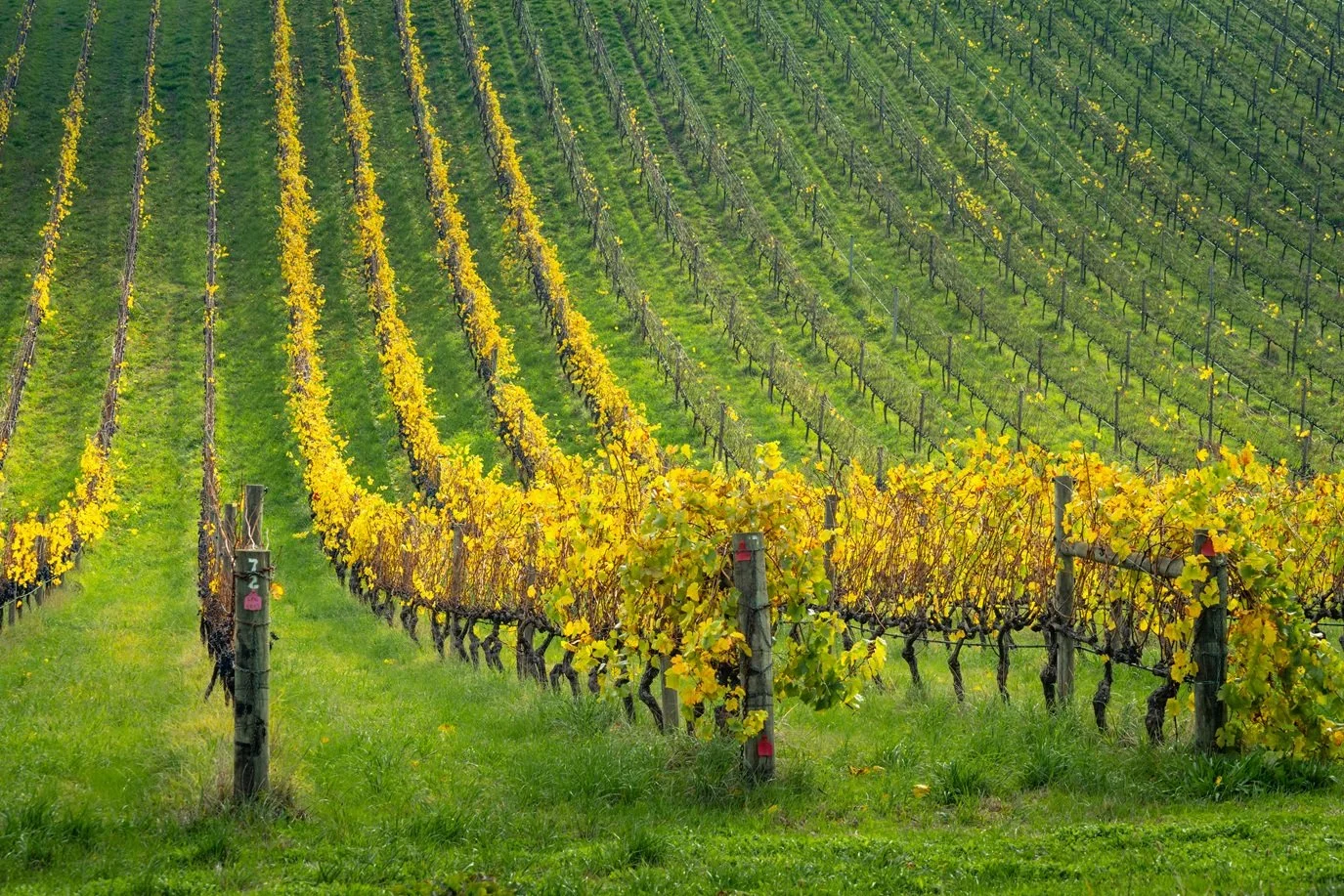
Why Are Steep Vineyard Slopes So Challenging to Manage Conventionally?
The physics are straightforward. A tractor and sprayer combination operating on a significant gradient is subject to lateral and longitudinal instability that increases substantially as the slope angle rises and as ground conditions deteriorate. On the chalk and clay-with-flints soils common across the North Downs (and equally across the South Downs, the Greensand Ridge and the escarpments of the Chilterns where UK viticulture is expanding), a wet May transforms a manageable slope into one where the risk of a machinery overturn becomes a serious operational concern.
Beyond the immediate safety risk, steep-slope operations place considerable mechanical stress on vineyard tractors, increasing fuel consumption, accelerating wear on transmission and braking systems, and requiring specialist equipment (narrow-gauge tractors, low-centre-of-gravity designs) that represents a significant capital commitment for a vineyard operation of any scale.
Is This a Problem Specific to the North Downs?
The North Downs is the most immediately recognisable example in UK viticulture. Estates around Maidstone, Sevenoaks and the Darent Valley are well known, and the dramatic topography makes the challenge visible to anyone who visits. But the same issues apply across a broader geography of UK vineyard development.
The South Downs (particularly around Lewes and the eastern Sussex escarpment), the slopes around the Severn Vale in Gloucestershire and the steeper valley-side vineyards of Wales and the West Country all present comparable gradient challenges. As UK viticulture expands into new regions and onto more marginal sites, slope management is becoming a more widely relevant operational question rather than one confined to a handful of established estates.
How Does Drone Application Remove the Gradient Risk?
A drone operates independently of the terrain beneath it. It maintains a consistent flight height above the canopy surface regardless of what the ground is doing below: ascending, descending, and traversing slopes that would present serious challenges for any wheeled or tracked vehicle. The operator controls the aircraft from level ground at the field margin; no one is on the slope during the application, and no machinery is working on terrain where instability is a risk.
For vineyard managers who have previously accepted slope-related operational compromise (delaying sprays, reducing application frequency on the steepest blocks or accepting the risk of machinery operation in marginal conditions), drone application changes that calculus entirely. The steepest block on the estate becomes as straightforward to treat as the flattest one.
Does Slope Affect the Quality of Drone Application?
It doesn't. This is an important point for vineyard managers evaluating the practical effectiveness of drone-applied sprays on sloping ground. Because the aircraft maintains a consistent height above the canopy surface (following the terrain contour rather than flying at a fixed altitude above sea level), spray output, droplet size and canopy penetration remain consistent across the full block regardless of gradient.
The RTK GPS guidance system that underpins the flight path accounts for the three-dimensional shape of the vineyard. The drone follows the slope rather than cutting across it at a fixed height, which would result in varying distances to the canopy across different parts of the block. Coverage on a 30-degree slope is as consistent and effective as coverage on flat ground.
Are There Other Operational Benefits to Drone Application on Sloping Vineyards?
Soil structure is worth mentioning here. Steep vineyard slopes are often among the more erosion-sensitive areas of an estate; compaction from repeated machinery passes (particularly during wet conditions) can accelerate surface runoff, increase erosion risk, and damage the soil biology that contributes to vine health over the longer term. Drone application leaves no wheel tracks, causes no compaction and has no impact on the soil surface - a benefit that compounds across multiple applications through a season and across multiple seasons over the life of the vineyard.
For vineyard managers who have invested in cover cropping, reduced tillage, or other soil health practices as part of a longer-term approach to estate management, removing machinery from the steepest and most sensitive areas of the site is a natural extension of that commitment.