
The Summer Canopy Problem: Why Foliar Nutrition Needs to Go In from Above
By midsummer, most crops have reached their most challenging stage for product application. Canopies are dense, growth is rapid and getting nutrition into the plant efficiently becomes significantly harder. For arable farmers, orchard growers and commercial horticulturalists across the UK, this is the point in the season where the method of application matters as much as the product itself.
What is the summer canopy problem in agriculture?
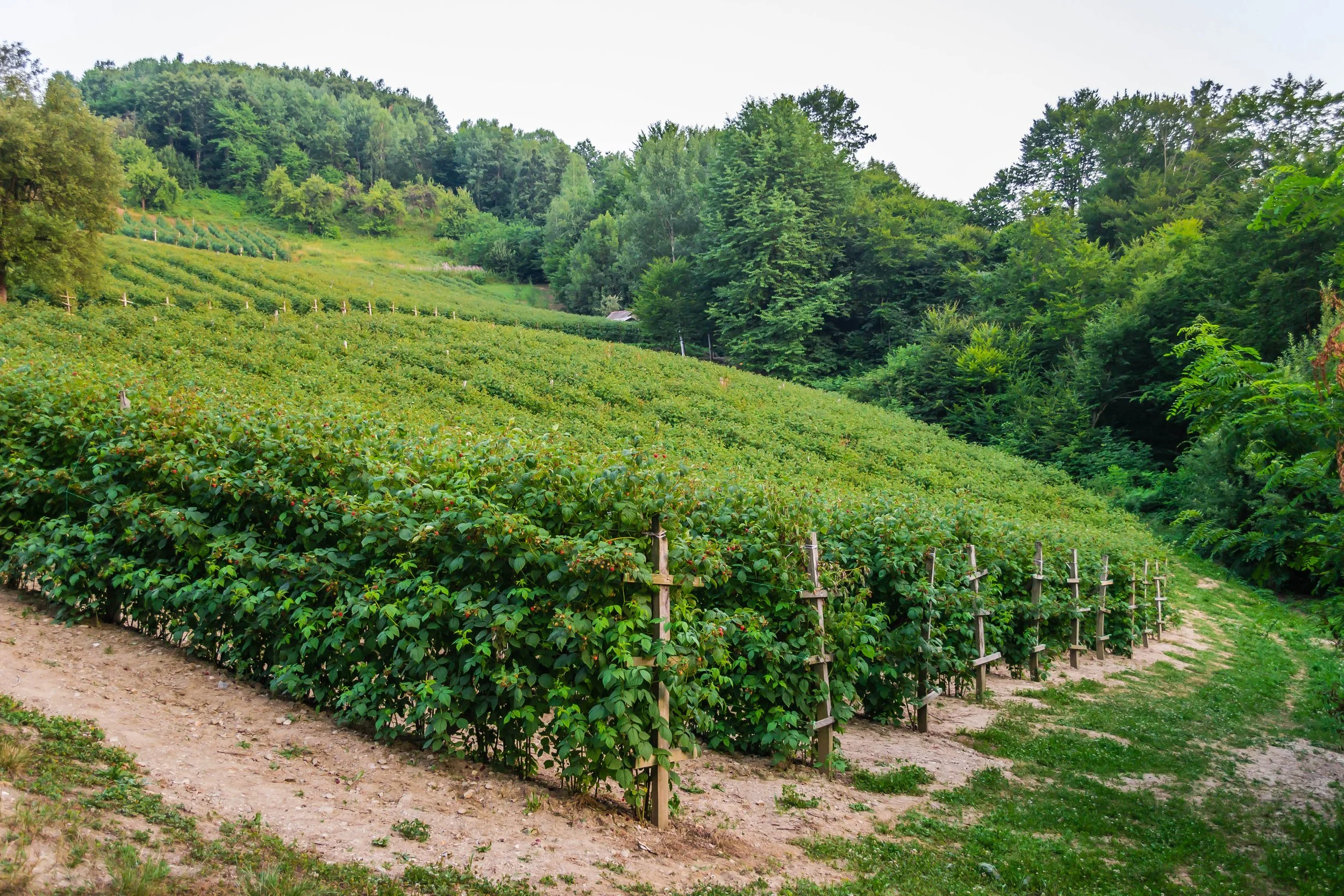
As crops develop through June and July, their canopies close over. In cereals, the leaves overlap, and the crop forms a dense, continuous sward. In orchards and soft fruit, new growth fills the space between branches quickly. The result is that products applied from ground level or from a fixed boom position struggle to penetrate beyond the outer layer of the canopy, leaving the inner parts of the plant under-treated or untreated altogether.
This matters most for foliar nutrition, where the goal is to deliver nutrients directly into leaf tissue rather than relying on root uptake. If the product can't reach the leaf, it can't do its job.
Why is aerial application better for foliar nutrition in dense crops?
The XAG P100 Pro agricultural drone approaches the canopy from above and uses its downwash effect to drive product downward through the crop. Rather than coating the top surface and stopping there, the airflow pushes the spray through successive layers of foliage, reaching the inner parts of the canopy where a boom sprayer simply cannot go.
This top-down approach is particularly effective for crops in full growth. The drone passes at low altitude, maintaining a consistent height above the canopy as it works, and the result is uniform coverage across the whole treated area rather than the surface-only application that ground-level equipment tends to produce at this time of year.
What foliar nutrition products can an agricultural drone apply?
The drone is well suited to a wide range of foliar inputs. Liquid nitrogen, magnesium, calcium, boron and other trace elements can all be applied aerially, as can biostimulants, amino acid products and seaweed-based nutrition. Plant growth regulators also fall within the scope of drone application, making the platform useful across a broad range of crop management programmes through the summer months.
It is worth noting that fungicides, herbicides and other chemical crop protection products cannot currently be applied via drone in the UK. Where those treatments are needed in orchards or vineyards, the XAG agricultural rover is the appropriate platform for ground-based application.
Which crops benefit most from drone foliar nutrition in summer?
Cereals benefit significantly during the grain-fill period, when rapid nutrient delivery via the leaf can support yield and quality at a critical stage. Oilseed rape, maize and other broadacre crops respond well to aerial application for the same reasons.
In orchards, foliar calcium applications during the summer are particularly valuable for crops such as apples and pears, where calcium deficiency contributes to storage disorders. Soft fruit operations across Lincolnshire, the Vale of Evesham and the Scottish Borders have similarly found aerial application useful for maintaining crop quality through the main growing period.
Vineyards also benefit from aerial foliar nutrition delivery, particularly where ground access between rows is limited or where the rover is already committed to a chemical treatment programme and a simultaneous foliar pass is needed.
How does drone application compare to boom spraying for summer foliar work?
The main advantage of the drone over a tractor-mounted boom in summer is access. A boom sprayer working across a cereal field in July risks compaction and crop damage at a stage when neither is acceptable. In orchards and vineyards, the boom may not be able to get into the rows at all.
The drone avoids both problems entirely. It doesn't touch the ground, it doesn't compact the soil, and it can work across a field or through an orchard without any of the physical constraints that limit ground-based machinery. For foliar nutrition in particular, where timing and coverage are everything, that flexibility has real practical value.
Is summer the best time to use an agricultural drone for foliar nutrition?
Summer is certainly one of the most productive windows for aerial foliar work, but it isn't the only one. Spring applications for vine nutrition, ahead of flowering, and autumn biostimulant passes, ahead of harvest, are equally well suited to drone delivery. That said, the dense canopy conditions that develop from June onwards are precisely where the aerial advantage becomes most apparent, which is why midsummer is often when growers first see the clearest difference between drone application and conventional methods.
If you'd like to discuss a summer foliar programme for your operation, get in touch with the QuadRotor team, and we'll help you work out the right approach.