
What are the benefits of using drones for spreading and spraying in agriculture?
Introducing aerial platforms into a commercial farming enterprise offers massive improvements in operational speed and resource conservation. At QuadRotor, we assist farm businesses with agricultural drone distribution to help modernise their field management. By shifting specific application duties to the sky, growers can protect their crops without causing physical damage to the field environment.
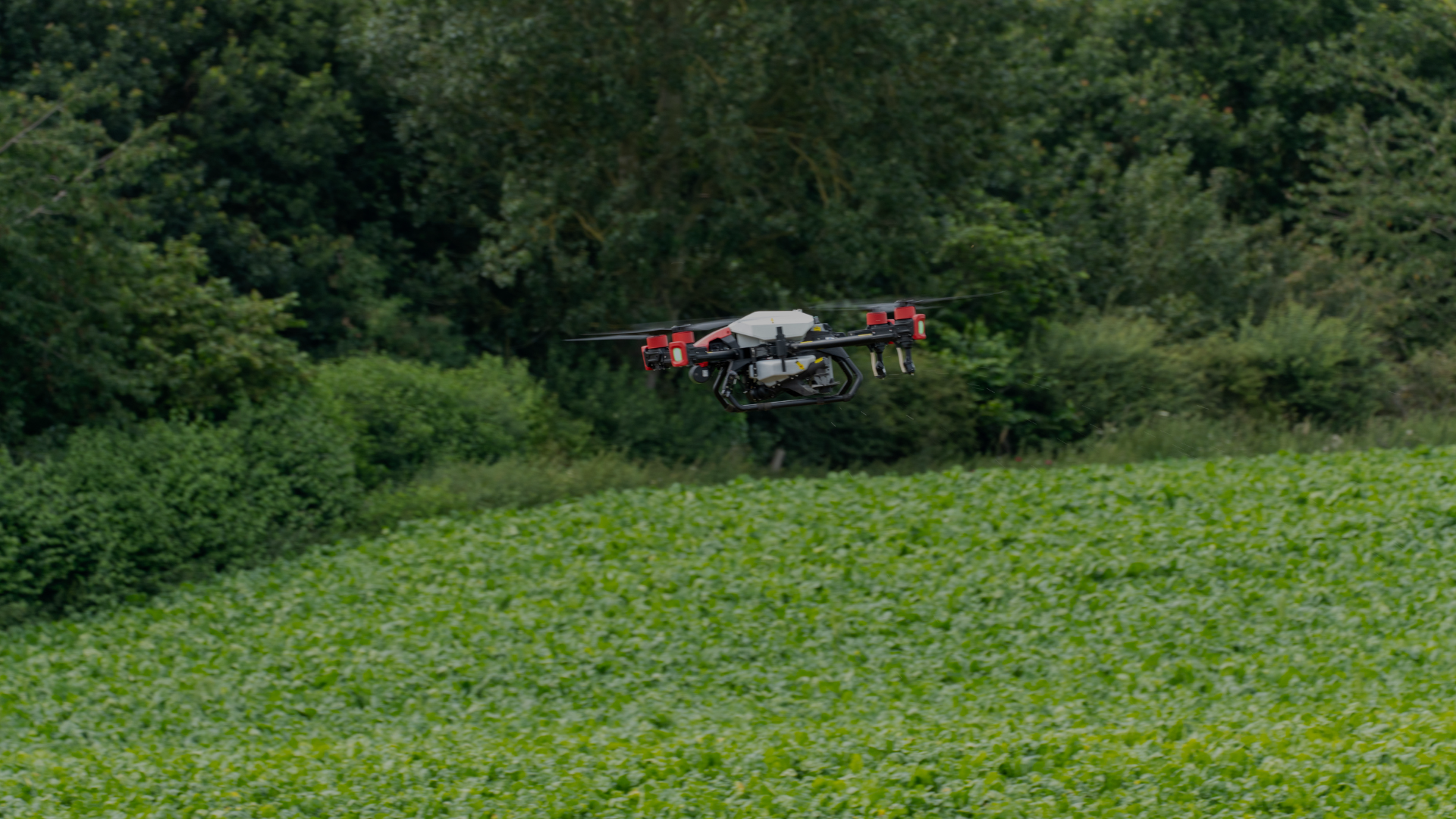
The primary advantage of this technology is the complete removal of heavy machinery from the crop floor during delicate growth phases. This weightless application method enables rapid intervention even when field conditions are unsuitable for heavy tractors.
However, UK operators must maintain a clear distinction between aerial capabilities and ground operations. Aerial drones are legally restricted from spreading regulated chemicals such as conventional weedkillers or fungicides. Instead, drones excel at distributing seeds and organic inputs from above, while ground rovers are deployed to handle targeted chemical applications safely on the surface.
Zero Soil Compaction: Because the drone operates entirely in the air, it prevents the structural soil damage and pore collapse caused by heavy tractor tyres.
Optimised Biological Release: The aerial platform is the perfect delivery mechanism for beneficial insects or living nematodes, using gentle pump mechanisms that keep the organisms alive.
Efficient Cover Cropping: Operators can broadcast cover crop seeds directly into standing crops prior to harvest, establishing green cover without an extra tractor pass.