
Autonomous ground rovers are changing the way high-value horticultural operations manage their crop protection programmes. In orchards and vineyards across the UK, the XAG agricultural rover is increasingly taking on the kind of repetitive, labour-intensive work that has traditionally placed significant demands on time, staffing and operator wellbeing.
What is an autonomous agricultural rover?
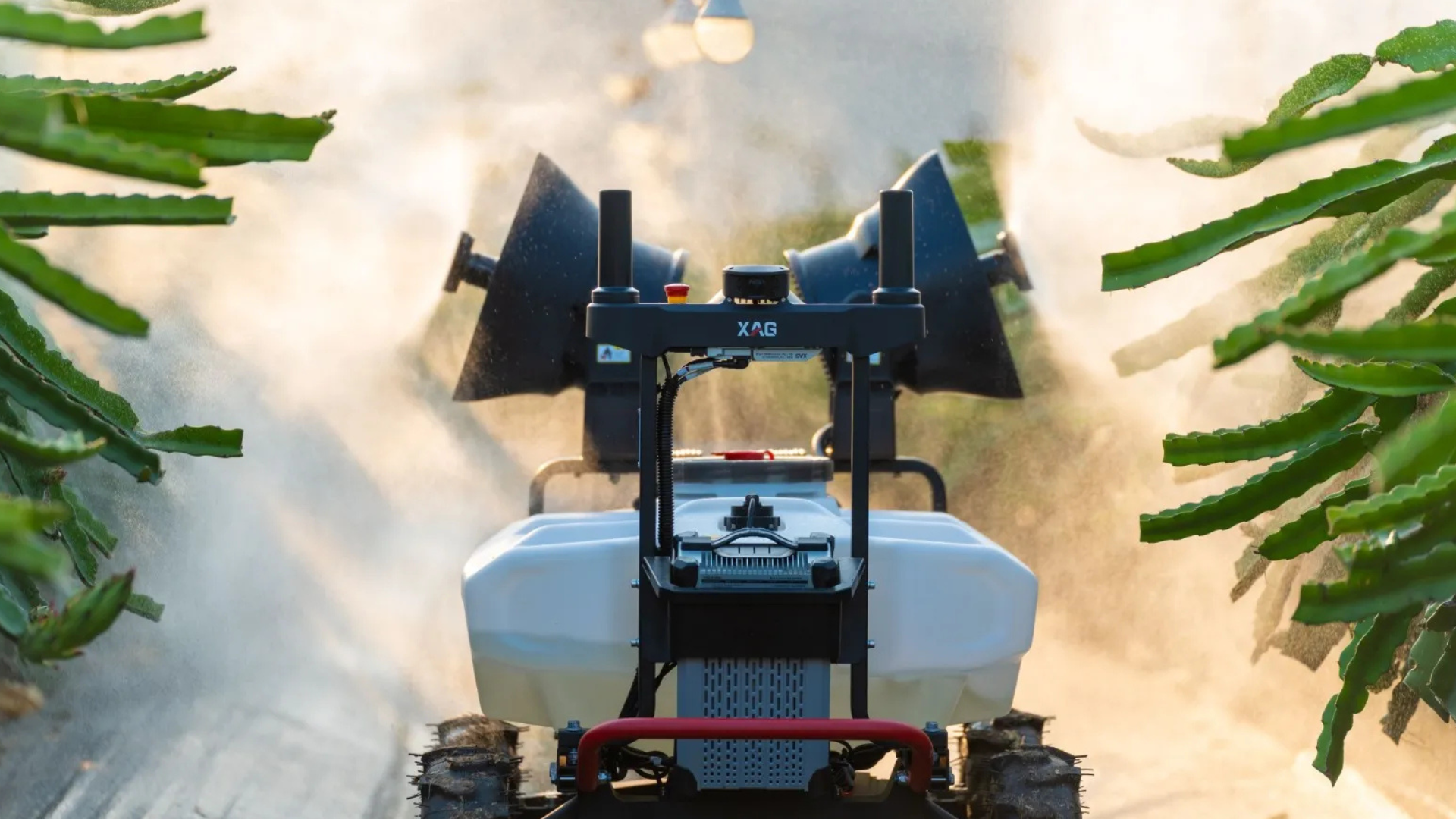
An autonomous agricultural rover is a self-driving ground vehicle designed to navigate crop rows and deliver precise treatment without continuous operator input. The XAG R100 and R200 rovers are built specifically for this kind of close-canopy work; compact enough to fit between tightly planted rows, yet capable of handling uneven ground and varying terrain gradients.
Once a route has been set, the rover repeats it independently. The operator doesn't need to walk the rows or manage the application directly; they simply monitor progress from a safe distance. In a busy orchard or vineyard during the height of the season, that kind of autonomy is genuinely valuable.
What tasks can an agricultural rover handle in orchards and vineyards?
Ground-based chemical treatments, including fungicides and herbicides, must be applied via rover rather than drone under current UK rules. For orchard and vineyard managers, this covers some of the most time-critical work of the growing season. Fungicide programmes in particular need to run consistently through spring and summer, and the consequences of a missed or delayed application can be significant.
The rover handles this work methodically and consistently, row by row, without fatigue and without the variability that comes with manual application. Its JetSprayer system drives product deep into the canopy on both sides of the row, achieving the kind of thorough coverage that is difficult to replicate with a hand lance or conventional sprayer in a confined space.
How does an agricultural rover improve operator safety?
One of the less-discussed advantages of autonomous rover technology is what it removes from the operator's day. Chemical handling and close-proximity spraying carry real risks, particularly during long treatment sessions in warm weather. Because the rover operates independently, the programme manager stays well clear of the spray zone throughout.
For farm businesses thinking about their duty of care to staff and contractors, this shift matters. The work still gets done to a high standard; it just no longer requires anyone to be directly in the middle of it.
Are autonomous rovers suitable for all orchard and vineyard layouts?
The XAG rovers are designed with high-value horticultural settings in mind. Their narrow profile allows them to work in rows that would be inaccessible to conventional machinery, and their autonomous navigation handles the kind of gentle gradients and uneven surfaces common in English vineyards and traditional orchards across the West Midlands, the South East and beyond.
That said, every site is different. The best way to understand whether a rover programme is suitable for your operation is to speak with the QuadRotor team, who can assess your layout and recommend the right approach.
What does the shift to autonomous rover technology mean for growers?
It means less time walking rows, less exposure to chemicals, more consistent application and a treatment programme that doesn't depend on staff availability or contractor schedules. For growers managing labour pressures alongside increasingly complex crop protection demands, that combination is increasingly hard to ignore.
The rover doesn't replace good agronomy or experienced management; it simply takes the repetitive, physically demanding work off the team's plate, freeing people to focus on the decisions that genuinely require human judgement.