
How do agricultural drones compare to traditional spraying methods?
Traditional spraying relies on heavy tractors or manual hand-held rigs, both of which carry significant operational bottlenecks. At QuadRotor, we demonstrate how unmanned aircraft capabilities provide a lighter, faster alternative that keeps farm operations moving forward regardless of ground conditions.
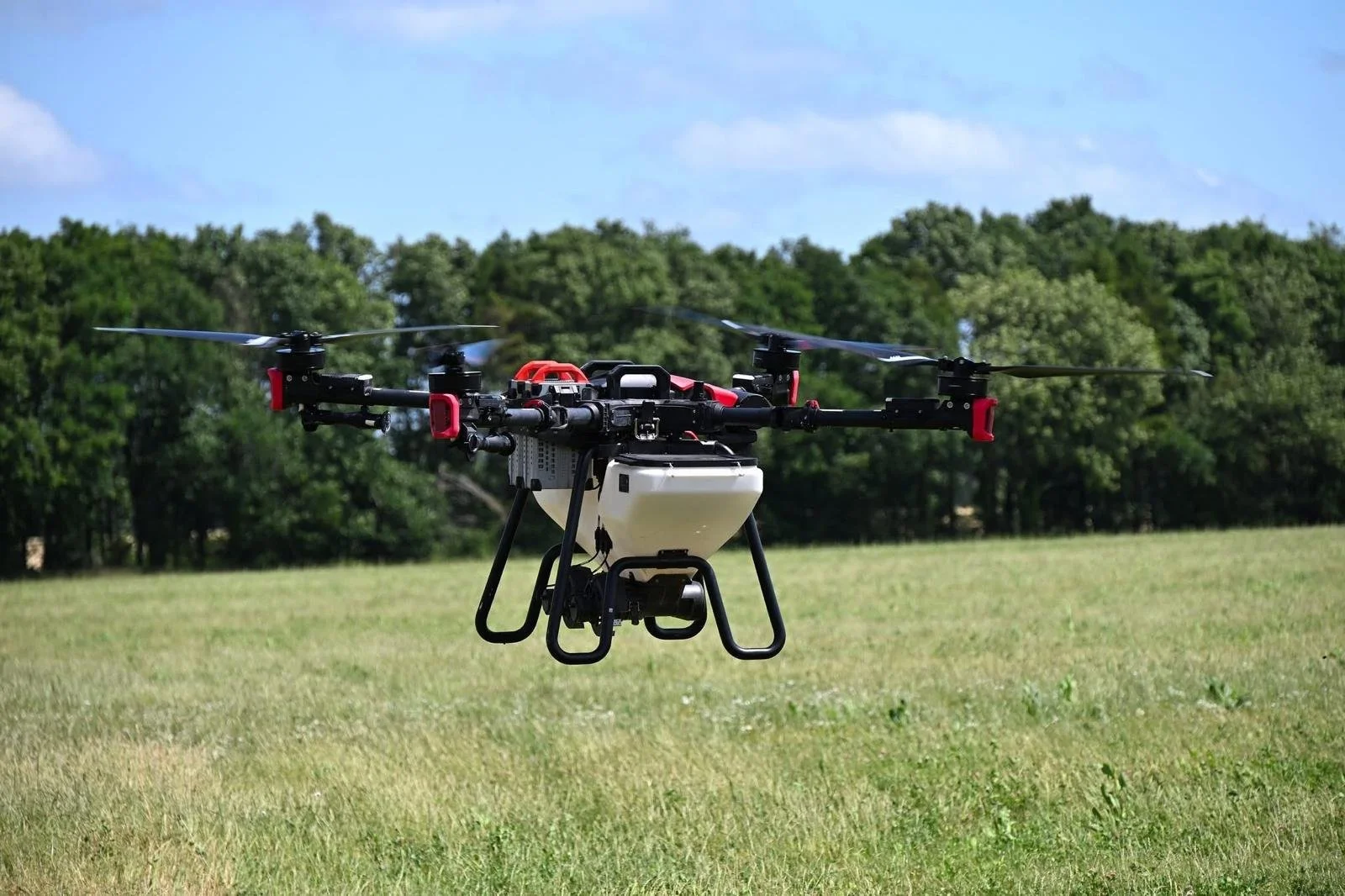
The most distinct difference is the environmental footprint. A traditional tractor exerts immense mechanical pressure on the earth, meaning it must stay out of the fields during wet periods to avoid destroying the soil structure. A drone operates completely independently of the ground, allowing immediate action after heavy rain.
However, farmers must understand the strict legal differences regarding chemical application. Heavy tractors and autonomous ground rovers are legally authorised to apply conventional crop protection products like weedkillers, algicides and fungicides. In contrast, aerial drones are legally barred from applying these synthetic chemicals in the UK and must be kept strictly for biologicals, seeds and nutrients.
Environmental Accessibility: Traditional tractor rigs are frequently kept in the shed during wet weather to avoid rutting fields, while drones fly completely unaffected by mud.
Water Volume Reductions: Aerial spray systems operate via ultra-low volume technology, utilising significantly less water to achieve thorough crop coverage.
Strict Chemical Segmentation: Ground-based rovers or traditional tractors must be used for synthetic crop protection, leaving drones to focus on weightless organic distribution.