
If apple scab is the disease that orchard managers plan for through the winter, powdery mildew is the one that tends to ambush them in May. It moves fast, it targets the softest and most productive growth on the tree, and it establishes itself during exactly the period when that growth is most valuable. For apple and pear growers across Kent, Herefordshire and the Vale of Evesham, keeping mildew under control during the May flush is one of the more demanding aspects of the spring spray programme. QuadRotor's agricultural drone services offer a way to reach the precise target zone (new shoot growth) with the consistency and speed that effective mildew control requires.
What Is Powdery Mildew and Why Does It Surge in May?
Apple powdery mildew (Podosphaera leucotricha) overwinters in infected buds and emerges with the first flush of spring growth. As temperatures warm and the tree rapidly pushes out new shoots through May, the fungus spreads from bud to tip, colonising the soft, immature tissue it finds easiest to infect. The characteristic white powdery coating on new leaves and shoot tips is the visible sign of an established infection; by the time it's clearly visible, the fungus has already been active for some time.
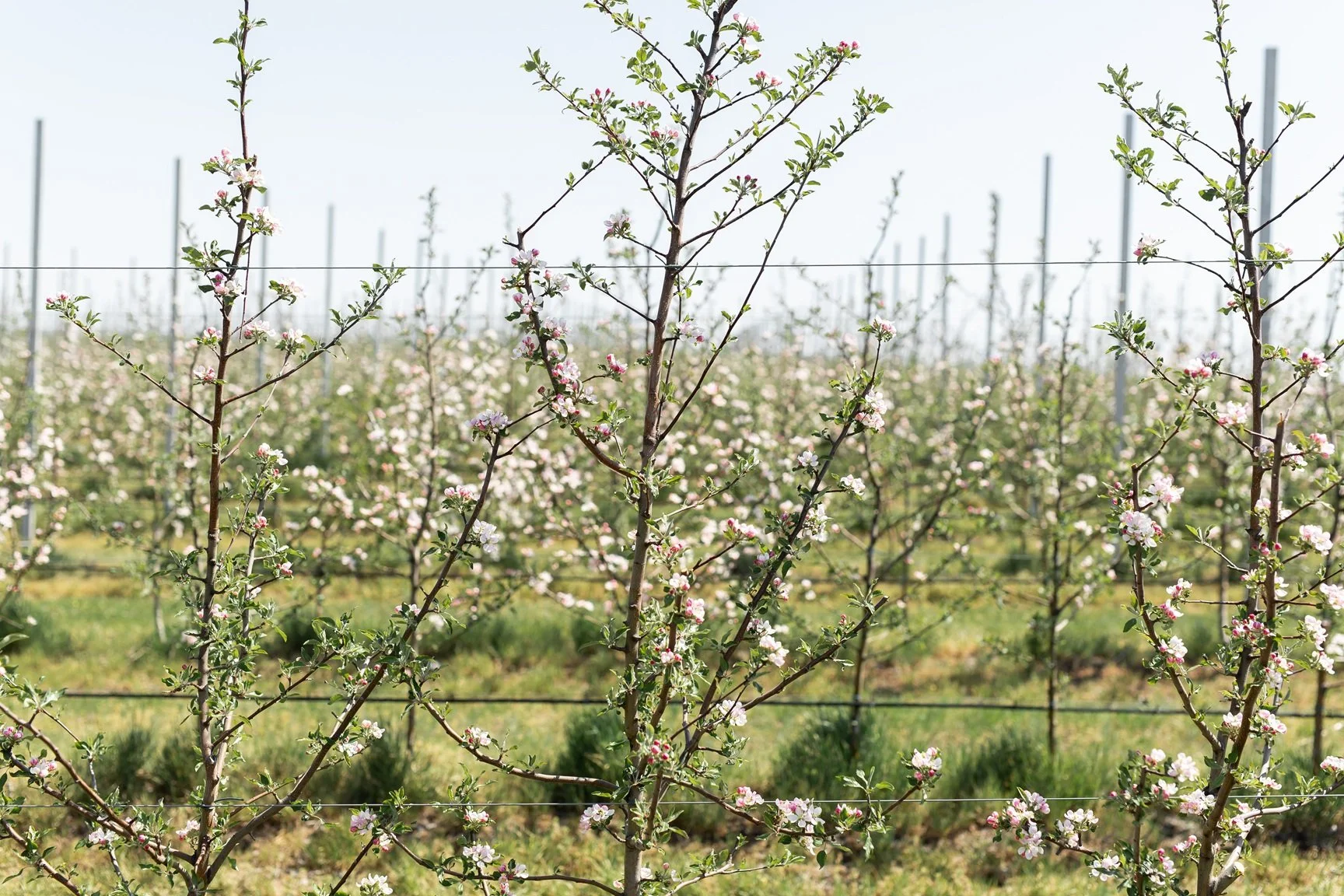
May's combination of mild temperatures, moderate humidity and rapid shoot extension creates near-ideal conditions for mildew development. Unlike scab (which is closely tied to rainfall events), mildew can spread readily in dry conditions, making it a threat even in seasons with limited wet weather.
Why Does It Matter Which Part of the Tree Is Infected?
Powdery mildew targets new growth specifically, and new growth in May isn't just this season's shoots. It's also the foundation of next season's fruiting wood. Shoots that are heavily mildewed through May and June develop poorly, produce fewer fruiting spurs, and carry the infection into the following season through infected buds. A mildew problem that isn't effectively addressed in spring doesn't just affect the current year's crop; it compounds across multiple seasons if left unmanaged.
For high-value varieties (Cox, Braeburn, Gala and others that are known to be particularly susceptible), the commercial stakes of poor mildew control are significant. Infected fruitlets at or near the shoot tips can also develop a characteristic russeting, making them commercially unacceptable even if they otherwise develop normally.
How Does Drone Application Target New Shoot Growth?
The challenge with mildew control is getting fungicide onto the right part of the tree at the right time, specifically onto the actively extending shoot tips where the infection is concentrating. In a May orchard, those tips are distributed across the outer canopy at the ends of branches that are growing quickly and in different directions.
The downwash generated by the drone's rotors drives spray into and through the canopy from above, reaching the outer shoot tips and the undersides of young leaves with a degree of penetration that can be difficult to achieve from a fixed over-row position. Because the drone travels along the row at a consistent height and speed, coverage across the shoot tips is even, not concentrated on one side of the row or varying with wind direction, as some ground-based applications can.
Can Application Rates Be Adjusted for Different Variety Blocks?
Yes, and in an orchard running a mix of varieties with different mildew susceptibility profiles, this flexibility is genuinely useful. Highly susceptible varieties (Cox is the most commonly cited example in UK orchards) may require tighter spray intervals and higher label rates during peak risk periods, whilst more resistant varieties in the same orchard can be managed on a lighter programme.
RTK GPS flight planning allows the drone's application parameters to be varied by block within a single operation, treating susceptible varieties at the appropriate rate without applying that same intensity across the entire orchard. For orchard managers looking to optimise input use without compromising control where it matters most, that precision is a practical and commercially relevant advantage.
Is Drone Application Suitable for Orchards on Difficult Ground?
Mildew pressure doesn't conveniently pause for ground conditions, and some of the UK's most productive top-fruit growing areas include orchards on slopes, heavy soils or layouts where tractor access during wet periods is genuinely restricted. Drones operate independently of ground conditions - a consistent advantage through the unpredictable weather of a UK spring.
For orchard managers managing mildew on difficult terrain (whether that's gradient, soil type, or proximity to watercourses that restrict machinery access), drone application removes a constraint that would otherwise force a compromise on spray timing at exactly the point in the season when timing matters most.