
Precision in the Press: How Drones Help Secure Uniform Grape Quality
Every winemaker knows that a truly great vintage isn't just made in the cellar; it’s made in the rows. Whether you’re producing a crisp sparkling wine in Kent or a delicate still white in Hampshire, the name of the game is consistency. If your grapes aren't ripening at the same speed across the entire site, you’re in for a massive headache come harvest time.
The problem usually starts with a "patchy" application in the field. When nutrition or protection is applied unevenly, you end up with a mix of sugar levels (Brix) that makes it nearly impossible to hit that perfect balance in the press. At Quadrotor, we’ve found that the shift toward precision viticulture is the most reliable way to iron out those inconsistencies before they ever reach the winery.
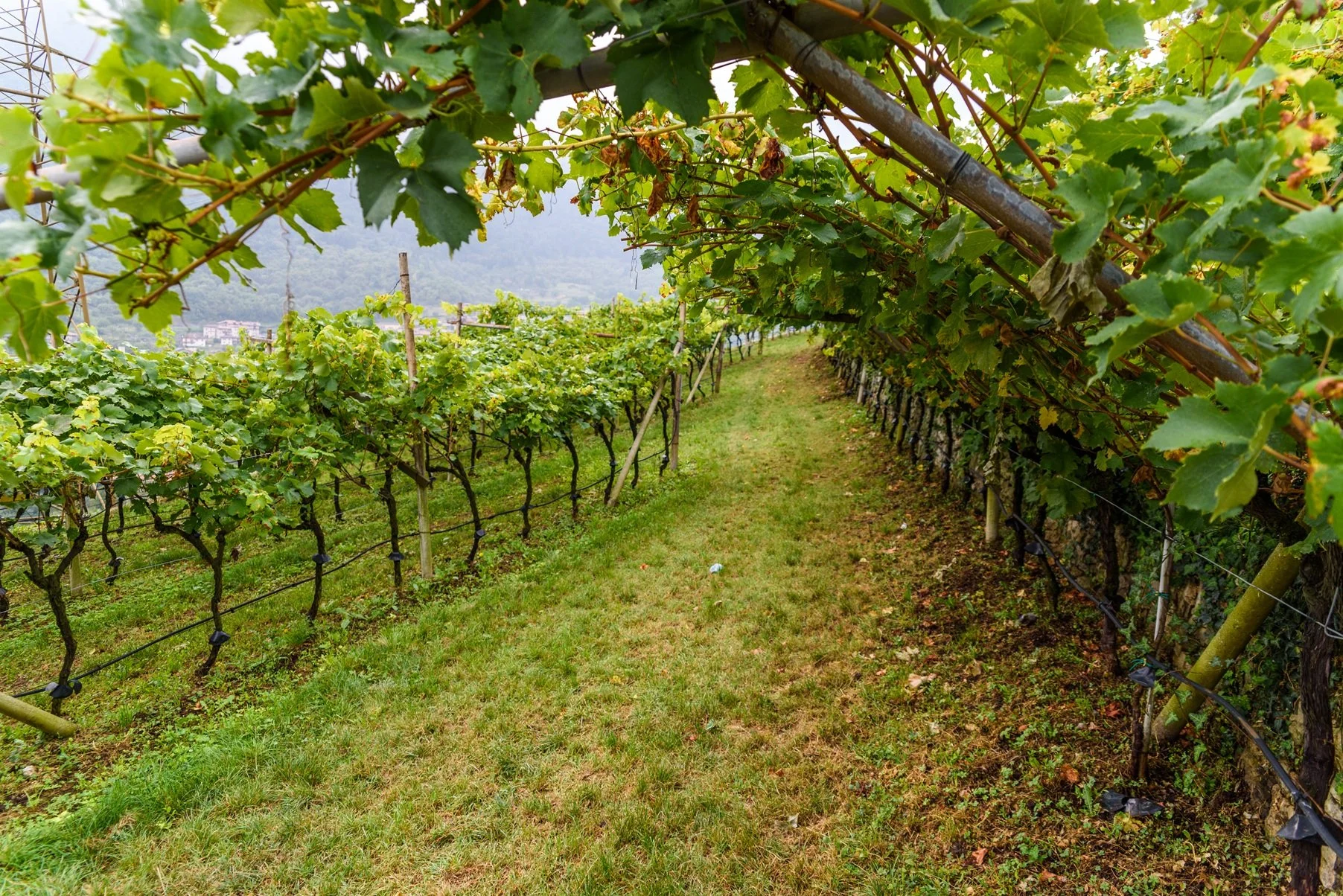
The End of the "Patchy" Application
Traditional ground-based spraying is tough work. Navigating narrow rows on a slope in the Surrey Hills or the South Downs means a tractor driver is constantly battling terrain. It’s only natural that application rates might fluctuate as the tractor speeds up, slows down, or hits a bump. These tiny variations add up, leading to some vines getting more "fuel" than others.
By moving the task to an automated, GPS-guided drone, you’re taking the guesswork out of the equation:
Centimetre-Level Accuracy: The drone follows a digital flight path with surgical precision. It doesn't get tired or "miss a spot."
Identical Dosage: Every single vine receives the exact same dosage of nutrition, regardless of whether it’s at the edge of the field or tucked away in a dip.
Uniform Canopy Coverage: Because the drone’s rotors generate a natural downward airflow, the treatment penetrates deep into the foliage, ensuring every bunch is supported equally.
Why Consistency in the Field Matters for the Press
When your vines are fed and protected with total uniformity, they start to "march in time." Instead of having some rows ready to pick while others are still lagging behind, the entire vineyard moves toward maturity at the same pace.
This directly translates into consistent sugar levels (Brix) at harvest. When the fruit arrives at the press, the winemaker isn't dealing with a "mixed bag" of under-ripe and over-ripe grapes. You get a much more predictable, high-quality juice that behaves exactly how you expect it to during fermentation. It’s about removing the friction from the winemaking process by getting the raw ingredients right from the start.
A Smarter Harvest for 2026
As we look at the 2026 season, the goal for any commercial vineyard is to maximise quality while minimising waste. Using drones for viticulture lets you be much more precise with your inputs. You aren't just "blanketing" the field; you’re delivering a precise, high-standard of care that protects the integrity of your fruit.
It keeps your maintenance team safely on the ground and ensures that every bottle from your 2026 vintage reflects the true potential of your land. When the quality is uniform in the field, the excellence is guaranteed in the glass.