
Reforestation at Scale: Why Drone Seeding Is Changing How the UK Replants Its Woodlands
The UK has ambitious woodland creation targets and a significant gap between where tree cover currently stands and where it needs to be. Closing that gap requires replanting at a pace and scale that traditional methods were never designed to achieve. Manual seeding is slow. Ground-based machinery is restricted by terrain. And the window between site preparation and the establishment of competing vegetation is often shorter than it appears on a project timeline. QuadRotor's forestry drone services are being used across the UK to address that challenge directly, covering ground at a speed and consistency that changes what's actually achievable within a given replanting season.
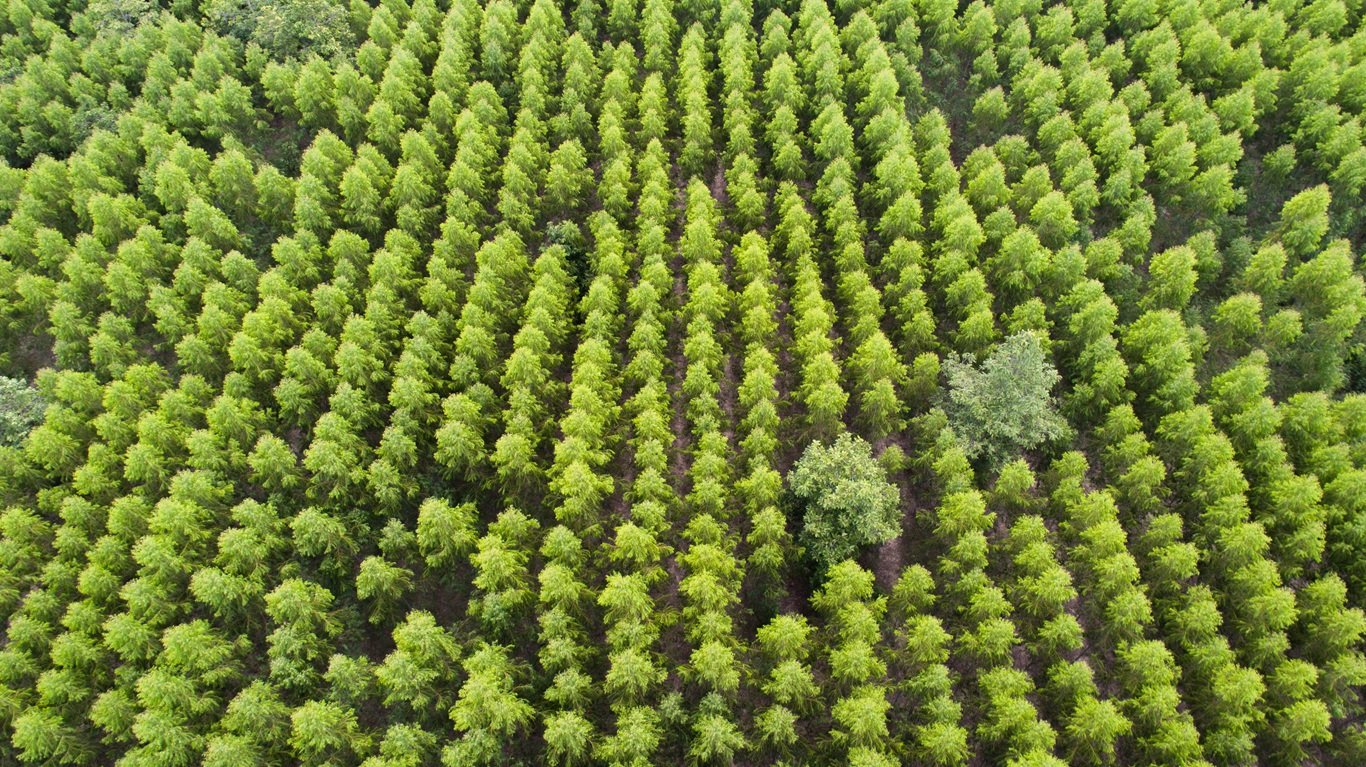
Why Is Drone Seeding Particularly Well Suited to Woodland Restoration?
Woodland restoration sites are rarely straightforward. They tend to occupy ground that is either too steep, too wet, too remote or too vegetation-choked to make conventional machinery a practical option. The sites where new woodland is most needed (degraded upland areas, former agricultural land on difficult terrain, steep valley sides across Wales, Scotland and the north of England) are often where traditional approaches to seeding struggle most.
Drones operate independently of those constraints. They don't need a track to drive along or firm ground to work from. They can cover sloping, uneven, or vegetation-covered ground at a consistent height and output rate, distributing seed evenly across terrain that would take a manual team days to cover on foot, if it could be covered at all.
How Does the AI Technology Onboard Ensure Even Seed Distribution?
Even distribution is one of the more technically important aspects of any seeding programme - too much seed in some areas and too little in others produces patchy establishment that undermines the long-term success of the planting. The XAG drone platform uses onboard AI and advanced GPS mapping to continuously track the aircraft's position throughout the operation, ensuring the same area is never seeded twice and that the full target zone receives consistent coverage.
Onboard sensors continuously adjust for environmental variables (wind speed and direction, terrain gradient, flight speed) that would otherwise introduce variation in where and how densely seed is distributed. The result is a level of distribution consistency that manual broadcasting simply cannot replicate across a large or complex site.
What Germination Outcomes Has Drone Seeding Achieved?
Germination rates from drone-seeded sites have exceeded expectations in operational use - a result that reflects both the consistency of distribution and the ability to time and target applications with precision that traditional methods don't allow. Covering a large area rapidly means the seeding can be completed within an optimal window (soil moisture, temperature and competing vegetation at the right point) rather than being spread across multiple days or weeks as a manual team works through the site.
For woodland creation projects where germination success directly determines whether the project meets its establishment targets (and by extension whether funding conditions are satisfied), that reliability in outcomes is commercially and practically significant.
How Much Ground Can a Drone Cover in a Single Day?
Coverage rates depend on site complexity, seed type and application parameters, but agricultural drones operating in forestry seeding applications can cover considerably more ground per day than manual alternatives. For large-scale reforestation programmes (the kind being undertaken across the uplands of Scotland, Wales, and Northern England as part of national woodland expansion commitments), that throughput matters enormously.
A programme that would take a manual team weeks to complete can be executed in a fraction of that time, compressing the operational window, reducing the exposure of the freshly prepared site to weather and competing vegetation, and allowing project timelines to be met with a confidence that slower methods don't support.
Is Drone Seeding Suitable for Native Woodland Species Mixes?
Yes, and native species mixes are among the most commonly used in UK woodland restoration programmes, where biodiversity value and ecological appropriateness are central to the project objectives. The RevoCast spreading system handles a wide range of seed types and sizes. Mixes containing multiple species with varying seed weights and shapes can be broadcast effectively, with distribution parameters adjusted to account for the specific characteristics of the seed blend.
For projects targeting native broadleaf woodland creation (oak, birch, hazel, rowan and alder mixes among the most commonly specified across upland and lowland restoration programmes in the UK), drone broadcasting offers a practical and scalable delivery method that keeps pace with the planting programme's ambition.