
Row by Row: How the XAG R200 Rover Handles Extensive Vineyard Programmes
Managing a vineyard through the growing season means keeping on top of a demanding and time-sensitive treatment schedule. For larger vineyard operations, where the number of rows, the length of each run and the volume of product required all add up quickly, the XAG R200 agricultural rover offers a practical and reliable solution for ground-based treatment programmes.
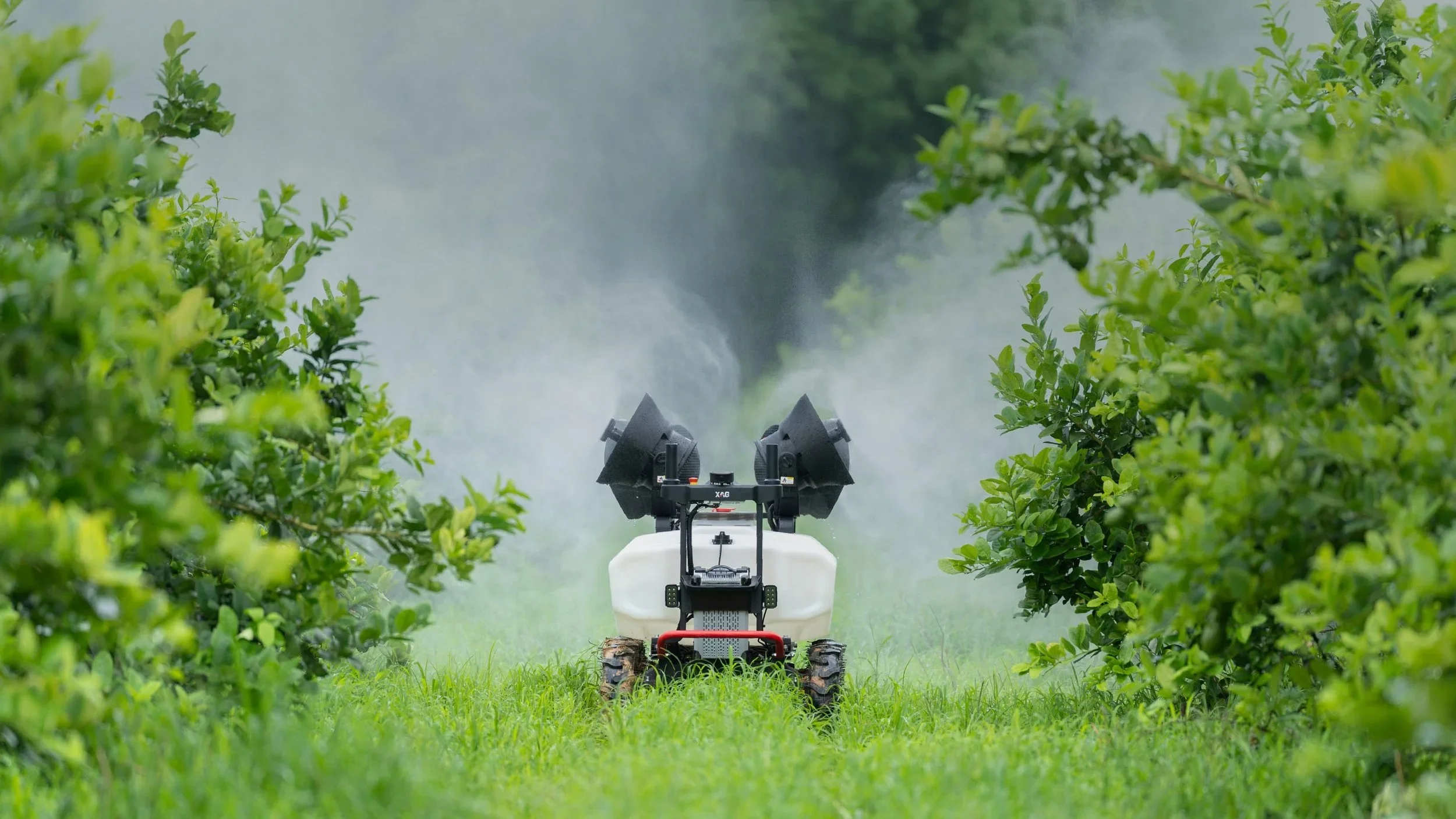
What makes the XAG R200 rover suited to vineyard work?
The XAG R200 rover is the heavier-duty of the two XAG ground rovers, built for operations where capacity and endurance matter. Its larger tank means fewer refill stops during a treatment run, which is particularly useful in vineyards where rows can be long and interruptions to the programme are disruptive. Six-wheel drive gives it the traction to handle the kind of uneven, sloping ground that is common across English vineyard sites from the North Downs to the Cotswolds.
For vineyard managers running regular treatment schedules through spring and summer, that combination of capacity and ground capability makes a meaningful difference to how much ground can be covered in a given day.
What vineyard treatments must be applied via rover rather than drone?
Fungicide applications are among the most critical treatments in any vineyard programme, and they must currently be delivered from the ground rather than by drone. Downy mildew, powdery mildew and botrytis are persistent threats throughout the growing season, and the window for effective treatment is often narrow. Missing or delaying an application can have significant consequences for crop health and ultimately for harvest quality.
The XAG R200 handles this work autonomously, working row by row through the vineyard and maintaining consistent output throughout. Herbicide programmes, which form part of the vineyard management plan, are equally well suited to rover delivery.
How does the R200 achieve good coverage in a vineyard canopy?
Getting the product into the bunch zone and onto both sides of the foliage is one of the central challenges in vineyard spraying. The R200's quad JetSprayer system generates directed airflow that drives the spray into the canopy from the side rather than simply coating the vine's outer surface. The result is thorough penetration through the foliage, reaching the areas where disease is most likely to develop.
This level of canopy penetration is difficult to achieve with a hand lance and requires careful calibration with tractor-mounted equipment. The rover delivers it consistently on every pass, without variation between operators or fatigue-related inconsistency late in the day.
Can the R200 rover handle sloping vineyard terrain?
Yes. English vineyards are rarely flat, and many of the country's most productive sites sit on slopes that present real challenges for conventional spraying equipment. The R200's six-wheel drive system distributes traction effectively across uneven surfaces, and its adaptive speed control adjusts the rover's pace on inclines to maintain stability and consistent application.
For vineyards on steeper ground in areas such as the Meon Valley in Hampshire or the slopes above the Medway in Kent, this matters both for the quality of the treatment and for the safety of the operation. Removing the need for operators to work on steep slopes with heavy spray equipment is a significant benefit in its own right.
How does the R200 rover work alongside the agricultural drone in a vineyard programme?
The rover and the drone are complementary tools rather than alternatives. Throughout the main growing season, the R200 handles the ground-based chemical treatment programme, including fungicide applications, while the XAG P100 Pro drone can be deployed for foliar nutrition passes when aerial delivery offers better canopy penetration or when a simultaneous programme is needed.
This dual approach gives vineyard managers considerably more flexibility than relying on a single method, and it means the most time-critical work on either platform doesn't have to wait for the other to finish.
Is the XAG R200 rover the right choice for all vineyard operations?
For larger vineyard sites or those with longer rows and more demanding terrain, the R200's additional capacity and six-wheel traction make it the stronger choice. For smaller or more compact vineyard layouts, the XAG R100 rover may be a better fit. The QuadRotor team can advise on the right platform for your site; get in touch to discuss your vineyard layout and treatment programme.