
The Automated Nursery: How Drones and Rovers Are Changing Protected Cropping
Protected cropping has always been at the more intensive end of UK horticulture; high investment, high output and tight margins that leave very little room for inefficiency. What's changing is the technology available to manage that intensity. Autonomous systems (drones operating outside the structure, ground rovers working within it) are beginning to reshape how large commercial nurseries and polytunnel operations approach everything from crop protection to climate management. QuadRotor's agricultural services sit at the centre of that shift, bringing precision-led automation to some of the UK's most demanding growing environments.
What Does Automation Actually Mean in a Protected Cropping Context?
In practical terms, automation in protected cropping means replacing tasks that have traditionally required significant manual labour (spray applications, shading, cleaning, ground-level treatments) with autonomous systems that can execute those tasks more consistently, more quickly and with greater precision than a manual team.
It doesn't mean removing people from the operation. It means redeploying them away from physically demanding, repetitive, or hazardous tasks towards the skilled work that genuinely requires human judgement. For nurseries across Lincolnshire, the Lea Valley and the Vale of Evesham (where labour availability and cost have been a consistent operational pressure for years), that distinction matters considerably.
How Do Drones Fit Into a Large Nursery Operation?
Outside the structure, agricultural drones handle tasks that would otherwise require access equipment, large spray rigs or manual teams working at height. Shading compound application, plastic film cleaning, and foliar treatments across open or semi-open growing areas are all well-suited to drone delivery; faster than ground-based alternatives, more consistent in coverage, and free from the soil compaction and surface damage that wheeled machinery can cause in and around production areas.
For large glasshouse complexes where roof maintenance has historically been one of the most logistically demanding aspects of the annual programme, drone application changes the calculus significantly. A job that once required days of scaffolding and manual labour becomes a planned, weather-timed operation that the growing team can schedule with confidence.
Where Do Ground Rovers Come In?
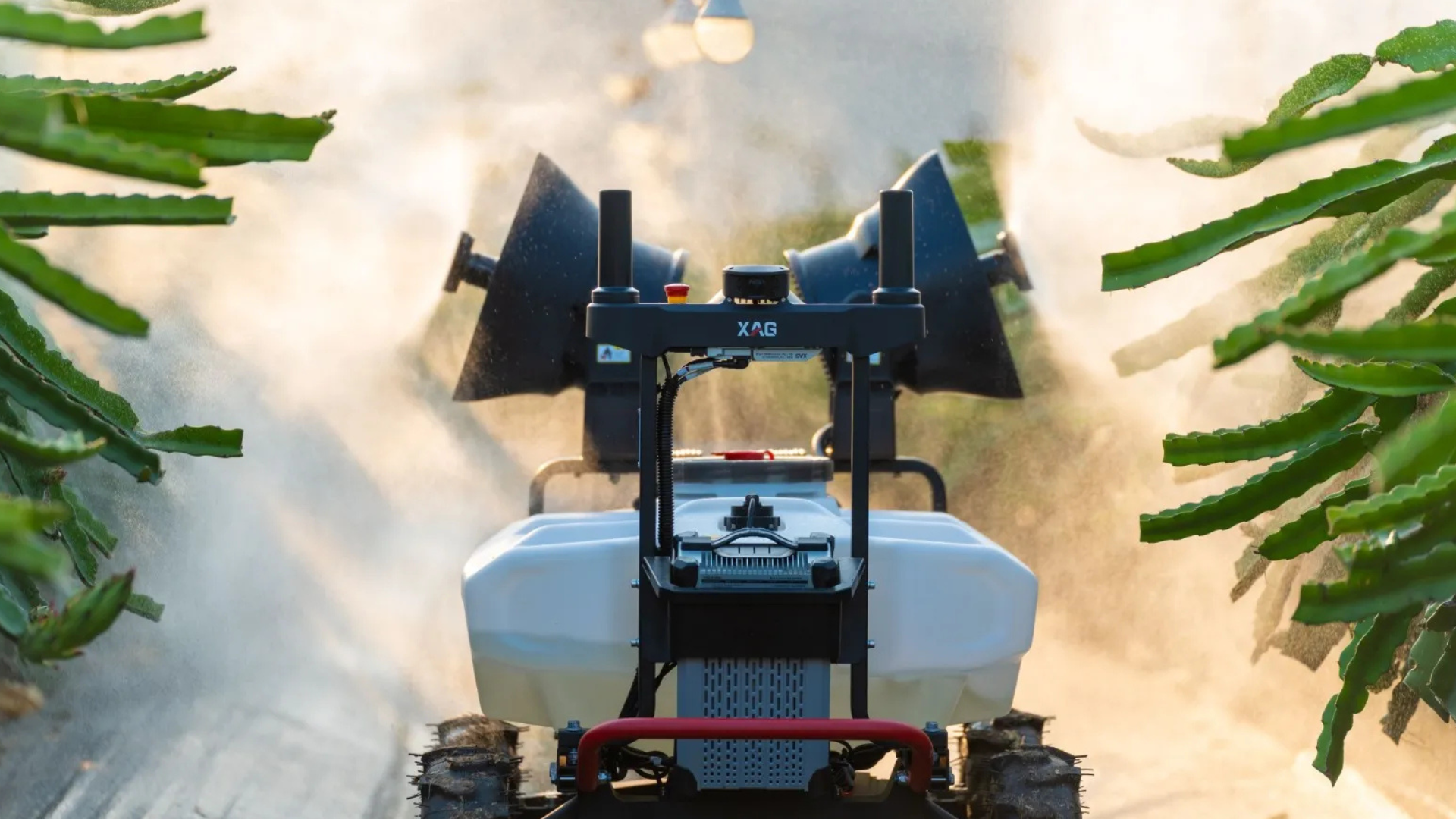
Inside polytunnels and glasshouse structures, where drones can't safely operate, the XAG R100 and R200 ground rovers take over. These autonomous platforms navigate pre-mapped routes between crop rows, applying liquid products (foliar feeds, fungicides, soil treatments) at the canopy level with consistent output and without the physical demands placed on staff by manual knapsack application.
For nursery operations managing large areas of pot plants, propagation stock or protected soft fruit (where spray coverage consistency directly affects crop uniformity and quality), rover-based application offers a level of repeatability that's genuinely difficult to achieve by hand across a large, multi-bay complex.
Does Autonomous Technology Work Alongside Existing Growing Systems?
Yes, and this is an important point for growers evaluating whether precision automation is relevant to their operation. Drones and rovers don't require a nursery to overhaul its existing infrastructure. They integrate with current growing programmes as an additional layer of precision and efficiency, applied where they add the most value, alongside the systems and practices already in place.
The mapping and planning process that underpins autonomous operation (RTK GPS flight planning for drones, route programming for rovers) is carried out in advance and can be updated as the season and the growing layout change. It's a flexible system, not a fixed one.
Is This the Direction Commercial Protected Cropping Is Heading?
The trajectory is clear. As labour costs rise, growing complexity increases, and the pressure to reduce chemical inputs whilst maintaining yields intensifies, the case for precision autonomous systems in commercial horticulture becomes stronger with each season. The technology is already in use at large-scale operations across the UK; it's not a future possibility but a present reality for growers who have chosen to adopt it.
For nurseries and protected cropping businesses weighing up where to invest in operational efficiency, autonomous application (whether via drone, rover or a combination of both) represents one of the more tangible and immediately practical options currently available. The results are measurable, the application is scalable, and the learning curve is considerably less steep than many growers initially expect.