
Growth Regulator Season: Consistent Sward Height Without a Tyre Mark in Sight
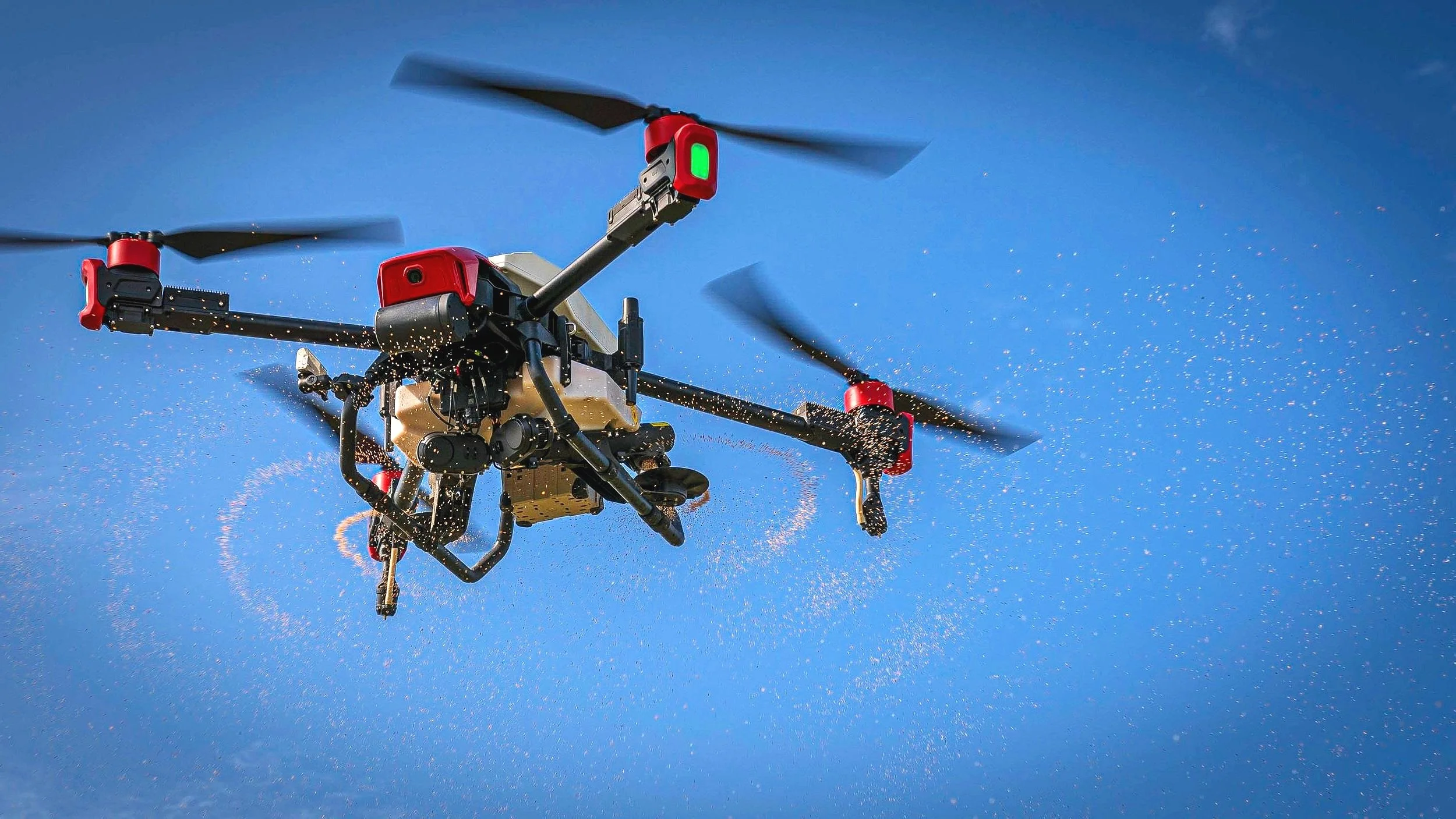
May / June is when the grass really starts to move. After the cautious, stop-start growth of early spring, rising soil temperatures and lengthening days combine to push turf into its most vigorous growth phase of the year - on a golf course, that means the maintenance programme has to keep pace. Plant growth regulators (PGRs) are among the most widely used tools in the greenkeeper's armoury for managing that surge, slowing the rate of vertical growth, improving sward density, and reducing the frequency of mowing without compromising playing quality. Getting them applied evenly and without surface damage across a course in peak play is the challenge. QuadRotor's golf and turf drone services deliver precision and zero-impact application to PGR programmes that conventional equipment struggles to match.
What Are Plant Growth Regulators and Why Are They Used on Golf Courses?
PGRs are products that temporarily moderate turf growth by influencing specific plant hormones involved in cell elongation. Applied correctly and at the right growth stage, they reduce the frequency of mowing required to maintain consistent playing heights (produce a denser, more uniform sward) and help turf manage stress more effectively during the heat of midsummer.
On a well-managed course, PGR applications in May and June can meaningfully reduce the maintenance burden during the busiest part of the playing season: fewer mowing passes, more consistent surfaces, and turf that enters the summer in better physiological condition than it would without growth regulation. The keyword is consistently; a PGR programme that delivers uneven results across a green or fairway creates playing surface variability that undermines the whole exercise.
Why Is Even Distribution So Important With PGR Applications?
Unlike some turf treatments, where a degree of application variability is tolerable, PGRs are sensitive to distribution consistency, which shows up directly on the playing surface. Areas that receive higher-than-intended rates slow their growth more than neighbouring areas, creating a patchwork effect in sward height and density that is both visually apparent and detectable underfoot (or underclub, on a putting surface).
Achieving perfectly even distribution with wheeled applicators on undulating terrain is genuinely difficult. Speed variation on slopes, turning manoeuvres at the end of runs, and the natural variation in output that comes with operator-controlled equipment all introduce inconsistency that a precisely calibrated drone application system avoids.
How Does Drone Application Improve PGR Distribution?
Flight paths are pre-programmed to maintain consistent speed, height and output rate throughout the entire application - across flat ground, across slopes and through the kind of complex topography that a parkland or heathland course presents. The drone doesn't slow down on an uphill pass or speed up on a downhill one; it maintains the parameters set during planning regardless of the terrain beneath it.
For greens with significant undulation (a feature of many traditional British courses where green design deliberately introduces complexity), that consistency across the full surface is particularly valuable. Every part of the green receives the same application rate. The result is a uniform growth response rather than the patchy variation that uneven distribution produces.
Can Drone PGR Applications Be Completed Without Disrupting Play?
This is where the operational picture for golf courses becomes genuinely compelling. The XAG drone platform operates at a noise level considerably lower than conventional ride-on or tractor-mounted application equipment - low enough that applications can be carried out without the kind of disruption that requires clearing golfers from adjacent holes or scheduling maintenance into the narrow windows before the course opens.
For busy UK courses through May (when early morning tee times and long evenings make the window for disruptive maintenance increasingly narrow), the ability to apply PGRs during normal playing hours without disturbing members or visitors is an operational advantage that course managers find immediately practical rather than theoretical.
Is Drone Application Suitable for All Areas of the Course?
Greens, approaches, tees and fairways are all well-suited to drone PGR application. Each presents slightly different flight parameters in terms of height, output rate, and coverage pattern, but all are manageable within the same operation. Rough areas and semi-rough (where PGR use is less common but not unknown on courses managing transition-zone consistency) can also be incorporated into a drone application programme.
For course managers running PGR programmes across a full 18-hole layout (greens, tees and fairways covering a considerable area on a typical UK course), the speed of drone application means the entire course can be treated within a single operational window. Maintaining timing consistency across the site is important for uniform growth across the entire layout.