
The Forester's New Ally: Drone Fertiliser Application in Established Woodland
Reforestation and woodland creation have received a great deal of attention in recent years, and rightly so. The UK has ambitious tree-planting targets, and the role of new woodland in carbon sequestration, biodiversity enhancement and landscape resilience is well understood. But the focus on establishment sometimes overshadows an equally important question: how do you support the trees once they're in the ground and growing? For established young woodlands and productive timber plantations, particularly those on terrain where ground equipment cannot operate effectively, the agricultural drone is emerging as a practical tool for delivering the nutrition that supports healthy, vigorous growth.
What is drone fertiliser application in an established woodland?
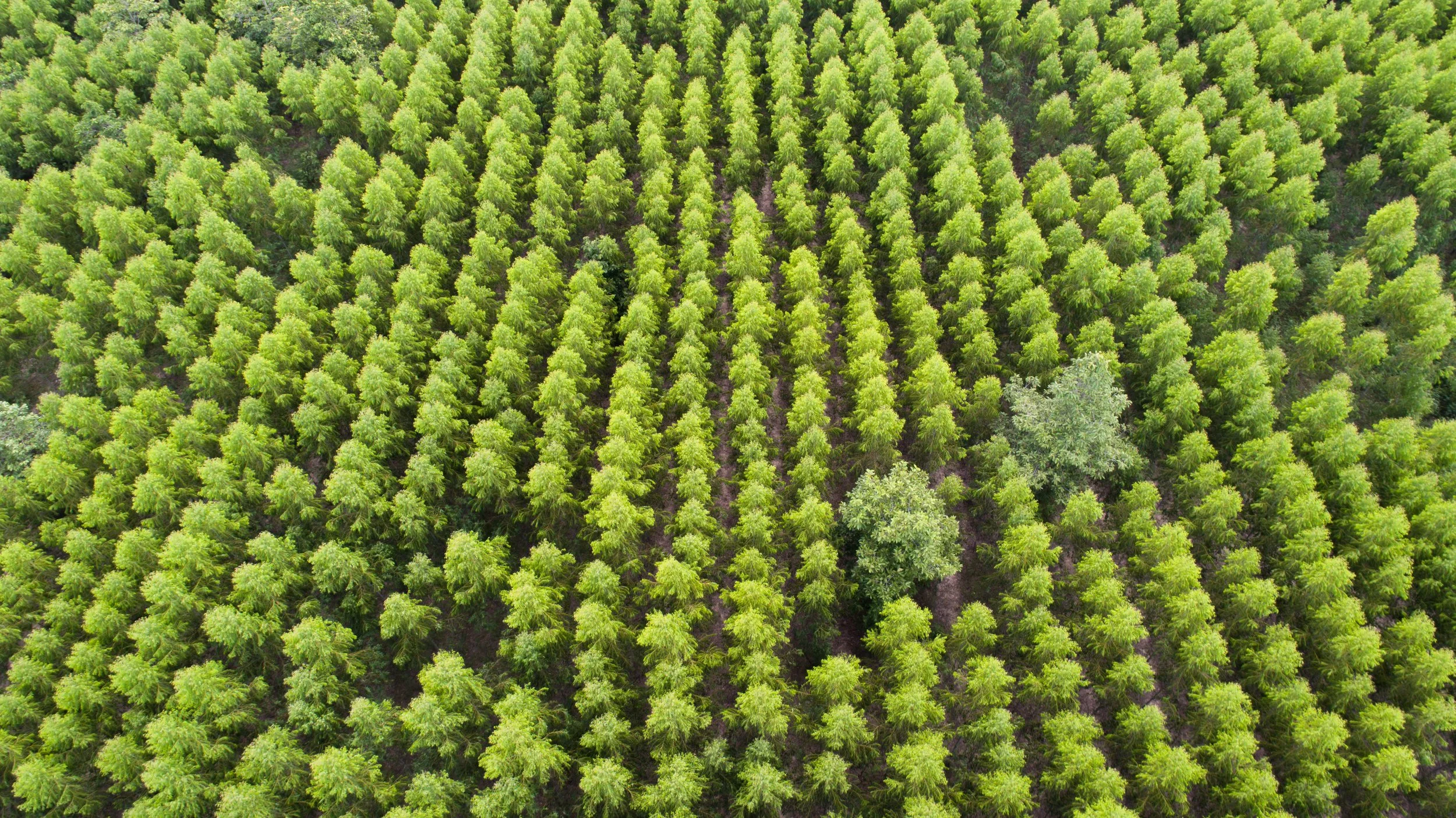
Drone fertiliser application in woodland involves using the XAG P100 Pro agricultural drone to broadcast granular or liquid fertiliser across young plantations and established woodland where conventional spreading equipment cannot reach. This includes steep-sided valleys, hillside plantations, recently restocked coupes and any woodland site where the combination of terrain, tree density and ground conditions makes tractor or ATV access impractical or impossible.
The drone flies a pre-planned route across the woodland, dispersing product evenly from above and covering ground that would otherwise require either helicopter application, which is expensive and logistically complex, or manual spreading by hand, which is slow and difficult to keep consistent across a large site.
Why do established woodland and timber plantations need fertiliser support?
Young trees in the establishment phase and the years immediately following it have significant nutrient demands, particularly for nitrogen and phosphorus, which drive early growth and canopy development. On many upland and hill ground sites across the UK, soils are naturally low in available nutrients, and competition from ground vegetation during the early years of a plantation can further limit what the trees can take up through their roots.
Fertiliser application at the right growth stage can make a measurable difference to early height growth and canopy closure, both of which influence how quickly a plantation moves through its most vulnerable phase and begins to deliver the ecological and commercial outcomes it was established for. On productive timber sites in particular, early growth rates have a direct bearing on the long-term value of the crop.
Which woodland types benefit most from drone fertiliser application?
Upland conifer plantations are the most obvious candidates, particularly those on peaty or nutrient-poor soils across Wales, northern England and Scotland, where phosphorus availability is a limiting factor for establishment and early growth. Broadleaf woodland creation sites on former agricultural land may also benefit from nitrogen support in the early years, particularly where the land has been in low-input management and soil organic matter levels are modest.
Recently restocked coupes, where the previous crop has been harvested and replanting has taken place, often benefit from fertiliser support during the re-establishment phase. The disturbance associated with harvesting operations can affect soil structure and nutrient availability, and giving the new crop a nutritional boost during the first few growing seasons supports faster canopy closure and reduces the window during which competing vegetation can establish.
How does drone application compare to helicopter spreading for woodland fertilisation?
Helicopter application has traditionally been the method of choice for fertilising inaccessible woodland sites, but it comes with high cost and logistical complexity. Helicopters require specialist contractors, careful planning around flight paths and landing zones and weather windows that suit both the aircraft and the application. For smaller woodland areas or sites where the treatment need is targeted rather than blanket, the cost per hectare can be difficult to justify.
The agricultural drone offers a more accessible and flexible alternative for many woodland fertilisation tasks. It is easier to mobilise, can work on smaller areas cost-effectively and can be directed to specific parts of a site rather than covering the whole area at a uniform rate. For woodland managers working with a range of site types and treatment needs, the drone's flexibility is a practical advantage over the all-or-nothing logistics of helicopter application.
Can the drone apply fertiliser without damaging established trees or ground flora?
Yes. The drone operates above the canopy on open ground and young plantations where tree height allows, and at canopy level or above on more established sites. Granular product is broadcast from above and falls through the canopy to the forest floor, in the same way that natural leaf fall and rainfall deliver nutrients to the root zone. The drone doesn't disturb the ground surface, doesn't compact the soil, and doesn't damage the root systems of established trees, unlike heavy machinery operating within a plantation.
For woodland sites managed with biodiversity objectives alongside timber production, the non-invasive nature of drone application is a significant advantage. Ground flora, deadwood habitats and the structural diversity of the woodland floor are all left undisturbed by the operation.
How does woodland drone fertiliser application fit alongside other forestry drone services?
QuadRotor's forestry drone services cover a range of applications beyond fertiliser spreading. Aerial seeding for reforestation and woodland creation, covered in detail in earlier articles on the news hub, is one of the most established forestry uses of the XAG P100 Pro. Fertiliser support for established plantations is a natural complement to that, extending the drone's role from establishment into the ongoing management of the woodland as it develops.
For forestry managers and woodland owners considering how drone technology can support their operations across the full rotation, the two services work well together as part of a broader approach to precision woodland management. Get in touch with the QuadRotor team to discuss the drone services that could work for your woodland or plantation.