
Turf Under Pressure: How Drone Biostimulant Applications Support Summer Greens
The summer playing season is the most demanding time of year for golf course turf. High foot traffic, intensive mowing schedules, heat stress and reduced recovery time between rounds all place the sward under sustained pressure. For greenkeepers looking to maintain surface quality through the busiest months, biostimulant programmes delivered via agricultural drones are proving to be a practical and effective tool.
What are biostimulants and why are they used on golf course turf?
Biostimulants are products that support plant health and resilience rather than providing direct nutrition in the conventional sense. They include seaweed extracts, amino acids, humic and fulvic acids and beneficial microbial products, among others. On golf course turf, they are used to support root development, improve the sward's tolerance of stress conditions and help the grass recover more quickly from the wear and tear of regular play.
During summer, when turf is simultaneously dealing with heat, drought stress and physical wear, biostimulants can make a meaningful difference to how well the surface holds up. They don't replace a sound nutrition programme but they work alongside it, giving the plant additional support when it needs it most.
How does drone application improve biostimulant delivery on golf courses?
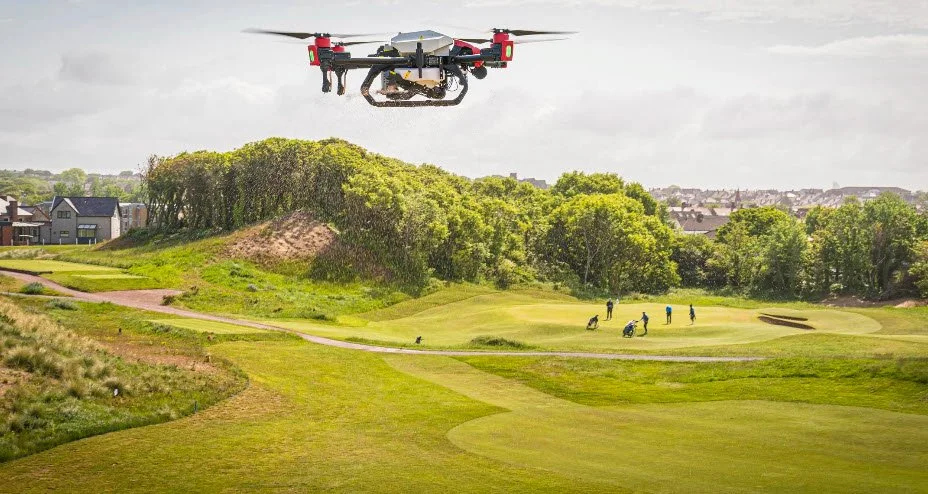
The XAG P100 Pro agricultural drone applies biostimulants quickly and uniformly across large turf areas without putting any weight on the surface. This is particularly relevant on golf greens, approaches and tees, where ground compaction from machinery is an ongoing concern and where surface quality is held to the highest standard.
A drone pass leaves no tyre marks, no compaction lines and no disruption to the playing surface. The application is even across the whole area rather than varying with tractor speed or operator technique, and the drone can cover a full eighteen-hole course in a fraction of the time that a ground-based programme would require.
When is the best time to apply biostimulants to golf course turf via drone?
Timing matters for biostimulant applications. Early morning applications, before play begins and before temperatures climb, allow the product to be taken up by the plant without the additional stress of intense heat. The drone is well suited to early starts; it is quiet, doesn't require a large crew to operate, and can be on and off the course before the first tee time of the day.
Applications during periods of active stress, such as a prolonged dry spell or immediately following a heavy play weekend, can also be particularly effective. The goal is to support the plant at the point when it is working hardest, and a drone programme can be scheduled responsively rather than being locked into a fixed calendar.
What is the difference between drone biostimulant application and growth regulator application on golf turf?
Both are delivered via the agricultural drone and both contribute to overall turf quality, but they serve different purposes. Growth regulators manage sward height and reduce mowing frequency, as covered separately in our growth regulator article. Biostimulants act at the physiological level, supporting the plant's own processes rather than altering its growth pattern. In practice, many greenkeepers use both as part of an integrated summer turf management programme.
Which areas of a golf course benefit most from drone-applied biostimulants?
Greens are the most obvious priority, given the standard of surface quality they are expected to maintain and the intensity of the traffic they receive. Tees and approaches are similarly high-value areas that benefit from the precision and non-invasive nature of drone delivery. Fairways can also be included, particularly on courses where summer stress leads to thin or worn patches that affect the playing experience.
For courses in drier parts of the country, including links courses along the Lancashire and Yorkshire coasts or parkland courses across the East Midlands, summer biostimulant programmes have become a routine part of the maintenance calendar rather than an occasional response to specific problems.
Can chemical turf treatments be applied via drone on golf courses?
Not currently. Fungicides, herbicides and other chemical treatments for golf course turf must be applied from the ground. Where these form part of the course maintenance programme, they fall outside the scope of drone application under current UK rules. The drone's role on the golf course is focused on nutrition, biostimulants and seeding, where aerial delivery offers clear practical advantages over ground-based methods.
If you'd like to discuss how a drone biostimulant programme could work for your course, get in touch with the QuadRotor team, and we'll work through the options with you.