
The Future of Forestry: Reforestation at Scale via Agricultural Drone Seeding
The UK has set ambitious targets for woodland creation, yet traditional reforestation methods are facing a significant bottleneck. Planting millions of trees by hand is a monumental task that is often hampered by labour shortages, rising costs and the sheer physical difficulty of the terrain. Whether it is a remote hillside in the Highlands or a sensitive peatland restoration project, the agri drone is emerging as the most scalable solution for the future of our forests.
At Quadrotor, we are seeing how advanced aerial technology can redefine what is possible in forestry, turning "decades-long" projects into achievable, multi-season realities.
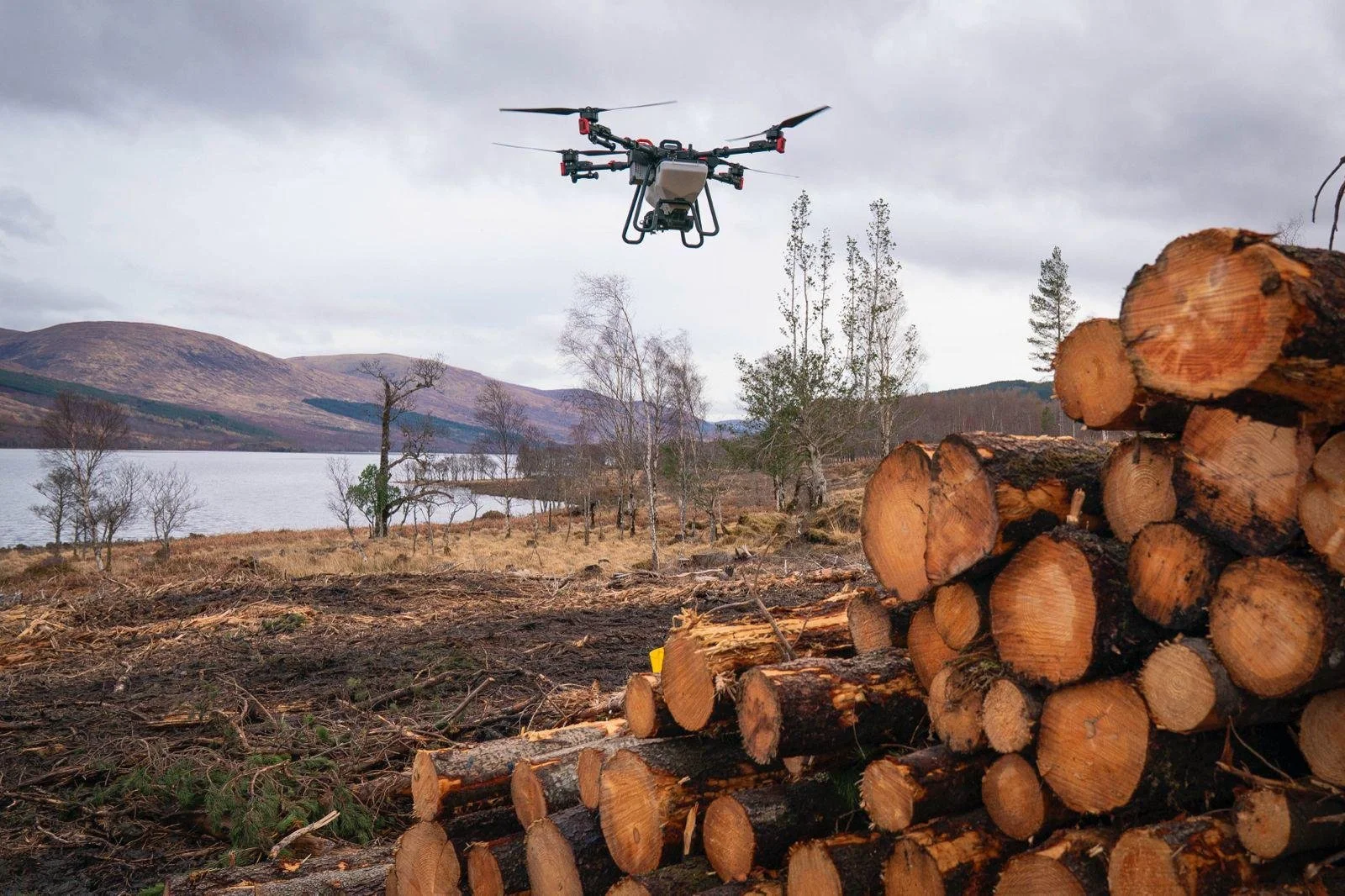
How do agricultural drones accelerate reforestation?
An agricultural drone doesn't just "help" with planting; it accelerates the entire process by an order of magnitude. Drone-assisted seeding can be up to ten times faster than traditional manual methods, allowing for thousands of native tree seeds to be broadcast across vast areas in a fraction of the time. In a single day, a professional operator can seed areas that would take a manual crew weeks to cover, with the drone capable of covering up to 15 hectares per hour in open terrain.
The Core Benefits of Aerial Seeding for Forestry
Moving from ground-based planting to an agri drone provides several immediate advantages for large-scale reforestation:
Overcoming Terrain Barriers: Drones easily access steep inclines, remote moorlands and "felled" areas littered with debris, which are often inaccessible to tractors and dangerous for manual crews.
Minimal Environmental Disturbance: Because the drone operates entirely from the air, it leaves zero "tyre tracks" on the forest floor, preserving the fungal networks and soil structure critical for young saplings.
Why aerial seeding is a cost-effective solution
While the initial investment in technology is significant, the long-term return on investment is clear. Research indicates that drone-assisted reforestation costs less than manual methods when accounting for labour, logistics and the higher survival rates achieved through precision placement.
Restoring the "Unreachable" in 2026
Drones are currently being used in the UK to re-seed peatlands and fens. By integrating the agricultural drone into your forestry management plan, you aren't just planting trees; you are building a more resilient, efficient and sustainable future for the British landscape.