
The Light Transmission Problem: What Dirty Polytunnel Plastic Is Really Costing You
Most polytunnel growers think about light in terms of the season; longer days in May, stronger sun in July, fading intensity by September. What's easy to overlook is how much of that light never actually reaches the crop in the first place. Dirty plastic film is one of the most underestimated yield-limiters in protected cropping, and across growing regions from the Lea Valley to Tayside, it's a problem that compounds quietly throughout the season. QuadRotor's greenhouse shading and cleaning services address this directly, without anyone needing to set foot on the roof.
How Does Polytunnel Plastic Lose Light Transmission?
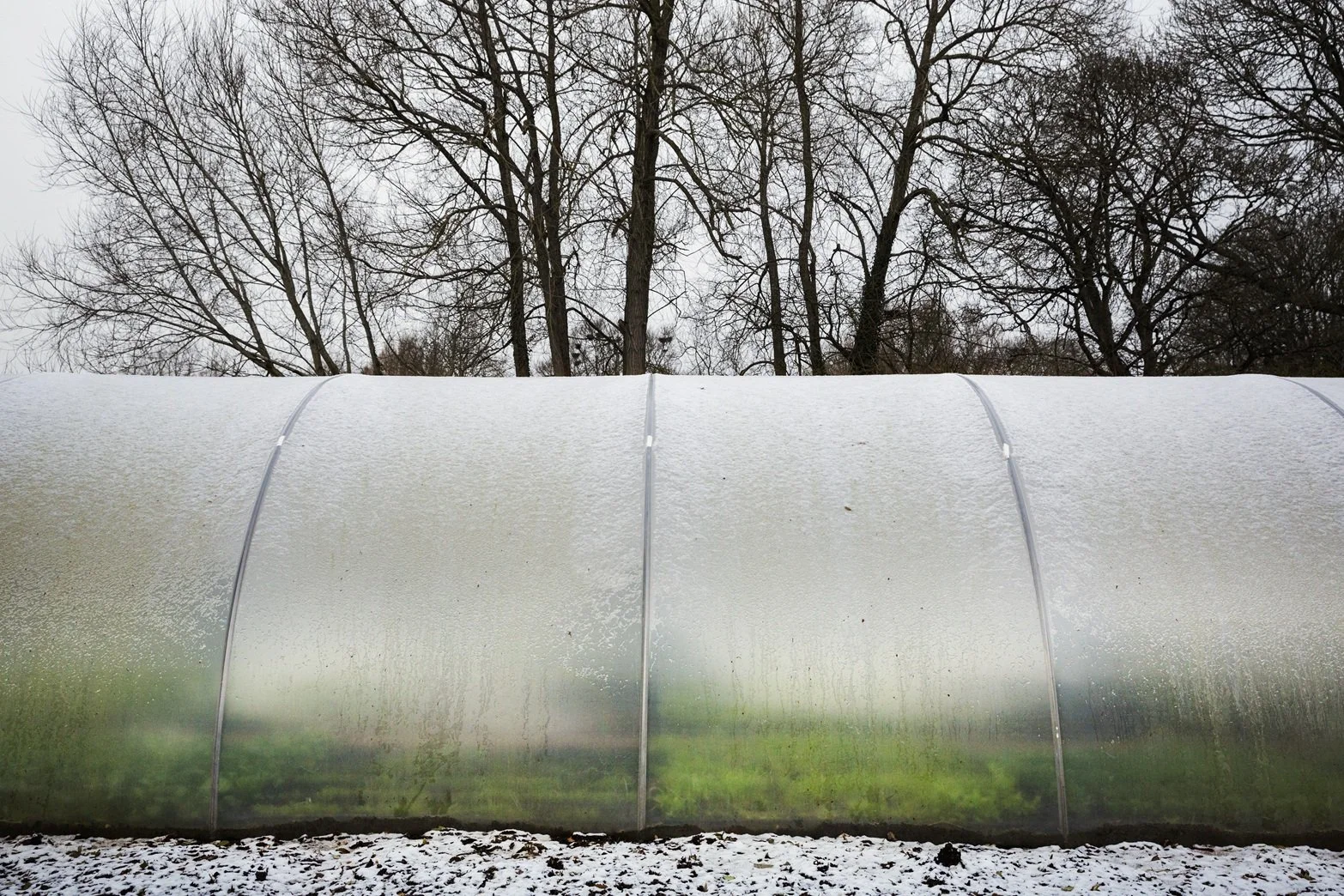
New polytunnel film transmits a high proportion of available light. Over time, that figure drops; not dramatically in a single event, but steadily, as layers of dust, atmospheric deposit, algae and pollen accumulate on the outer surface. Spring is particularly heavy with airborne particulates (tree pollen, wind-lifted soil particles and general atmospheric dust) that settle onto plastic film through March, April and May.
The result is a surface that looks acceptably clear from the ground but is quietly filtering out a meaningful percentage of the light your crop should be receiving.
Does Reduced Light Transmission Actually Affect Yield?
It does, and the relationship is well established in commercial horticulture. For light-hungry crops (strawberries, tomatoes, cucumbers and salad leaves in particular), even modest reductions in transmitted light during key growth stages can slow development, extend time to harvest and affect fruit quality. In a season where margins are already tight, that's a cost that rarely appears on a single invoice but shows up clearly in the end-of-season numbers.
The challenge for growers has always been that cleaning large tunnel complexes is time-consuming, physically demanding, and, if done incorrectly, risks abrading the film and shortening its serviceable life.
What Is Non-Contact Tunnel Care and Why Does It Matter?
Non-contact application (the approach QuadRotor uses) means the cleaning or treatment product is delivered via drone without any physical contact with the film surface. This matters because abrasive cleaning methods; brushes, pressure washing at close range, or manual scrubbing, can introduce micro-scratches that permanently reduce clarity and accelerate UV degradation of the plastic.
Drone-applied cleaning products are formulated to work on contact with the film surface, loosening biological growth and particulate deposit so that rainfall or a light rinse completes the process. The film is treated effectively without any mechanical contact that could compromise its integrity or lifespan.
How Does Drone Application Work Across a Large Tunnel Complex?
Flight paths are mapped in advance using RTK GPS, with the drone covering the roof surface systematically and at a consistent height. For large commercial operations (multi-bay complexes spanning several hectares, as are common in Herefordshire, Lincolnshire and the Scottish berry sector), the speed of drone application is a practical advantage that ground-based or manual methods simply can't match.
Application can be completed in a fraction of the time it would take a manual team, with no requirement for scaffolding, elevated platforms, or staff working at height. For nursery and protected cropping operations where health and safety considerations around roof access are a genuine concern, that's a meaningful operational benefit as well as a practical one.
How Often Should Polytunnel Plastic Be Cleaned?
For most commercial operations, a spring clean (timed to coincide with the build-up of pollen and early-season deposit) is the most valuable single intervention of the year. It means crops enter the high-growth period of May and June with maximum available light rather than a film that's been gradually dimming since the previous autumn.
Some larger operations or those in particularly dusty or pollen-heavy locations benefit from a second treatment later in the season. A site assessment is the most reliable way to determine what's actually needed, rather than applying a blanket schedule that may not reflect conditions on a specific holding.