
The May "Micro-Climate" Shield: Precision Greenhouse Shading
There's a particular vulnerability that comes with May in commercial protected cropping. After months of managing for light and warmth, the season tips; sometimes within a matter of days, and the inside of a glasshouse or polytunnel becomes the threat rather than the shelter. The first sudden heat spikes of the year are consistently among the most damaging, precisely because crops (and growers) aren't yet conditioned to manage them. QuadRotor's greenhouse shading service is designed to get ahead of that problem before it arrives, not after.
Why Is Early-Season Heat Stress So Damaging?
Crops that have developed through the cooler, lower-light conditions of early spring are physiologically less prepared for sudden high temperatures than those growing at the height of summer. A rapid spike in glasshouse temperature during May (even a brief one) can trigger stress responses in tomatoes, cucumbers, peppers and soft fruit that affect flowering, fruit set, and overall plant vigour at exactly the point in the season when those processes matter most.
For growers across the Lea Valley, the Vale of Evesham, and large glass complexes in Lincolnshire and West Yorkshire, losing even a portion of the early fruit set to an avoidable heat event is a costly start to the season.
What Does Greenhouse Shading Actually Do?
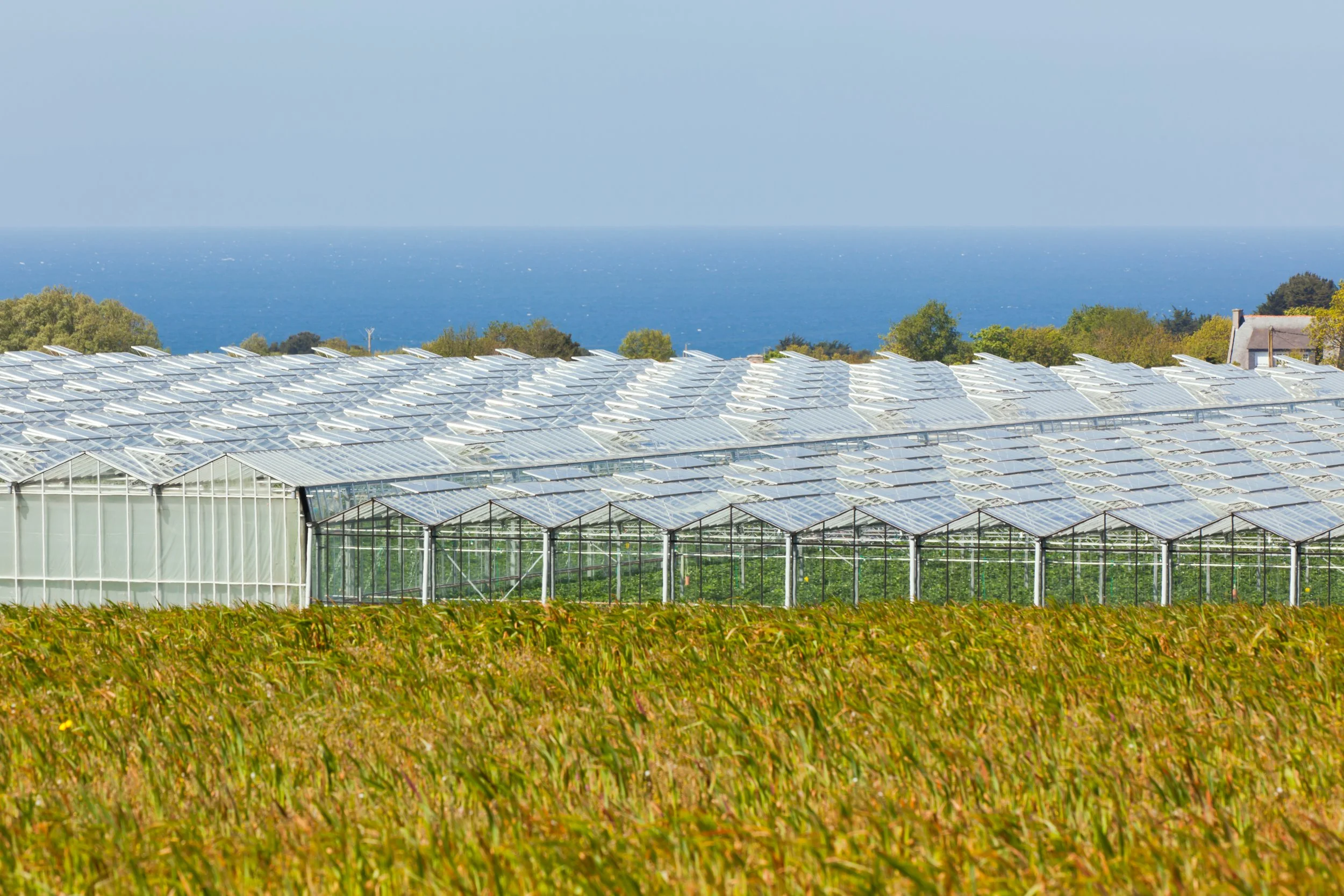
Shading compounds applied to the exterior of a glasshouse or polytunnel roof work by diffusing incoming solar radiation before it enters the structure. Rather than simply blocking light (which would be counterproductive for crop growth), a well-formulated shading product scatters direct sunlight into a more diffuse form; one that plants can use effectively for photosynthesis whilst the intensity that generates excess heat is reduced.
The result is a more stable internal temperature during high-irradiance periods, without sacrificing the light transmission that crops depend on for productive growth.
How Is Shading Applied by Drone?
QuadRotor applies shading compounds via agricultural drone, following pre-mapped flight paths that ensure consistent, even coverage across the entire roof surface. This includes ridges, valley gutters and the sections of a multi-bay complex that are genuinely difficult to reach by any other means without significant access equipment.
For large commercial nursery operations (where roof areas can run to several hectares and manual application would take days), drone application significantly compresses that timeline. Critically, it also removes the need for staff to work at height; a consideration that matters both operationally and from a site management perspective.
When Should Shading Be Applied?
Timing is everything with early-season shading. The goal is to have the product on before the first sustained warm period arrives; not scrambling to apply it after a damaging heat event has already occurred. In practice, for most UK growing regions, a May application window aligns well with the point at which solar intensity begins to outpace what ventilation alone can manage.
Working with a weather forecast and an understanding of the specific crop's sensitivity at its current growth stage will always produce better outcomes than applying to a fixed calendar date. QuadRotor's ability to mobilise quickly and complete large-scale applications efficiently means the timing decision can be made late (close to an identified weather window) without sacrificing the quality of the result.
Can Shading Be Removed at the End of the Season?
Yes; this is an important part of the overall strategy. The compounds used are designed to be washed off in autumn, once light levels drop and the shading is no longer beneficial. For UK protected cropping operations, that seasonal flexibility is essential. A product that goes on in May and comes off in September allows growers to manage for maximum light in both directions; protection during the high-intensity summer period, and full transmission restored as the season draws down. It's light-saving horticulture tech that works with the season rather than against it.