
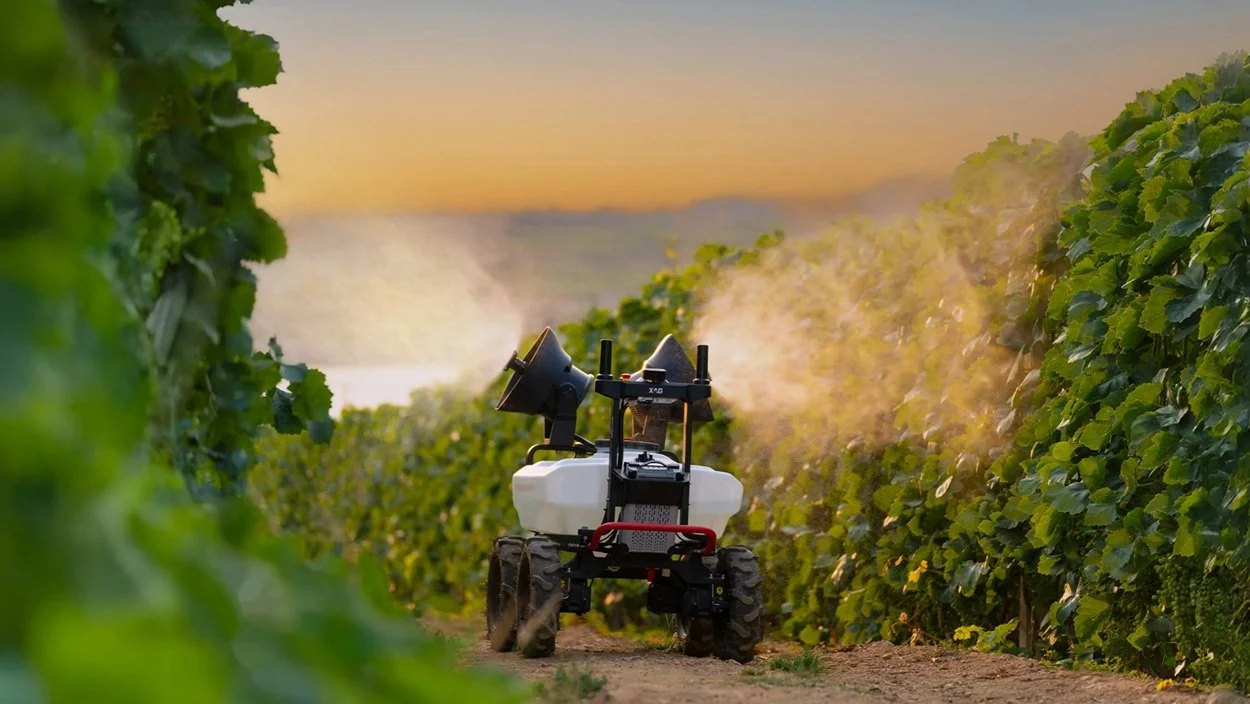
The XAG R100 and R200 agricultural rovers operate autonomously through the orchard or vineyard rows, delivering chemical treatments without requiring an operator to be present in the spray zone during the application. Once the rover is set up and running, the operator monitors progress from a safe distance using the remote controller, remaining well clear of the treated area throughout.
This separation between the operator and the application zone is one of the most straightforward practical benefits of rover technology. The work gets done to a consistent standard and the person responsible for it is not standing in the middle of it. For farm businesses with a duty of care to their employees and contractors, that distinction matters.
Does removing the operator from the spray zone affect application quality?
No. In fact, the opposite is often true. Manual spraying is subject to variability caused by operator fatigue, differences in technique between individuals, and the practical difficulty of maintaining consistent coverage over long treatment sessions. The rover applies product at a programmed rate along a precise, repeatable route, without variation from the start to the end of the session and without the inconsistencies that accumulate over a long working day.
The rover's JetSprayer system drives product into the canopy from the side, achieving thorough coverage on both surfaces of the foliage and penetrating to the bunch zone in vineyards or the inner canopy in orchards. This level of coverage is achieved consistently on every pass, regardless of how long the session has been running or how many rows have already been completed.
What chemical treatments can the agricultural rover apply in orchards and vineyards?
Ground-based rover treatment covers the range of chemical applications that cannot currently be made via drone in the UK. In orchards and vineyards, this includes fungicide programmes for diseases such as apple scab, powdery mildew, downy mildew and botrytis, as well as herbicide applications where these form part of the crop protection plan.
For nutrition and biostimulant applications, the XAG P100 Pro agricultural drone remains the most appropriate platform, approaching the canopy from above and using its downwash to drive product into the foliage. The rover and the drone complement each other within a full-season programme, each handling the applications for which it is best suited.
How does rover-based application support farm health and safety compliance?
Reducing operator exposure to chemical products is a recognised objective in farm health and safety management, and the autonomous rover directly contributes to that goal. By removing the operator from the spray environment for the duration of the application, it addresses one of the more difficult aspects of conventional spray operations that procedural controls alone cannot manage.
For farm businesses reviewing their risk assessments for crop protection activities, the rover represents a practical rather than purely procedural improvement. The hazard doesn't just have controls placed around it; the operator is physically separated from it throughout the operation.
Is operator safety the main reason to consider rover-based treatment?
It's an important reason but not the only one. Consistent application quality, the ability to treat rows that conventional machinery cannot access, reduced soil compaction compared to tractor equipment, and the operational efficiency of autonomous working all contribute to the case for rover-based treatment in orchards and vineyards. Operator safety sits alongside these practical advantages rather than standing alone as the sole argument.
For most farm businesses, the decision to adopt rover technology is driven by a combination of factors; the operator welfare benefits are a welcome addition to a case that is already strong on agronomic and operational grounds.
How do I find out more about rover-based crop protection for my orchard or vineyard?
The QuadRotor team is happy to discuss how autonomous rover treatment could work within your existing crop protection programme. Whether you're looking to improve coverage consistency, address access challenges in tight rows or reduce the chemical exposure burden on your team, get in touch and we'll work through the options with you.