
Supporting the "Fruit Set": Targeted Foliar Nutrition for Orchard Crops
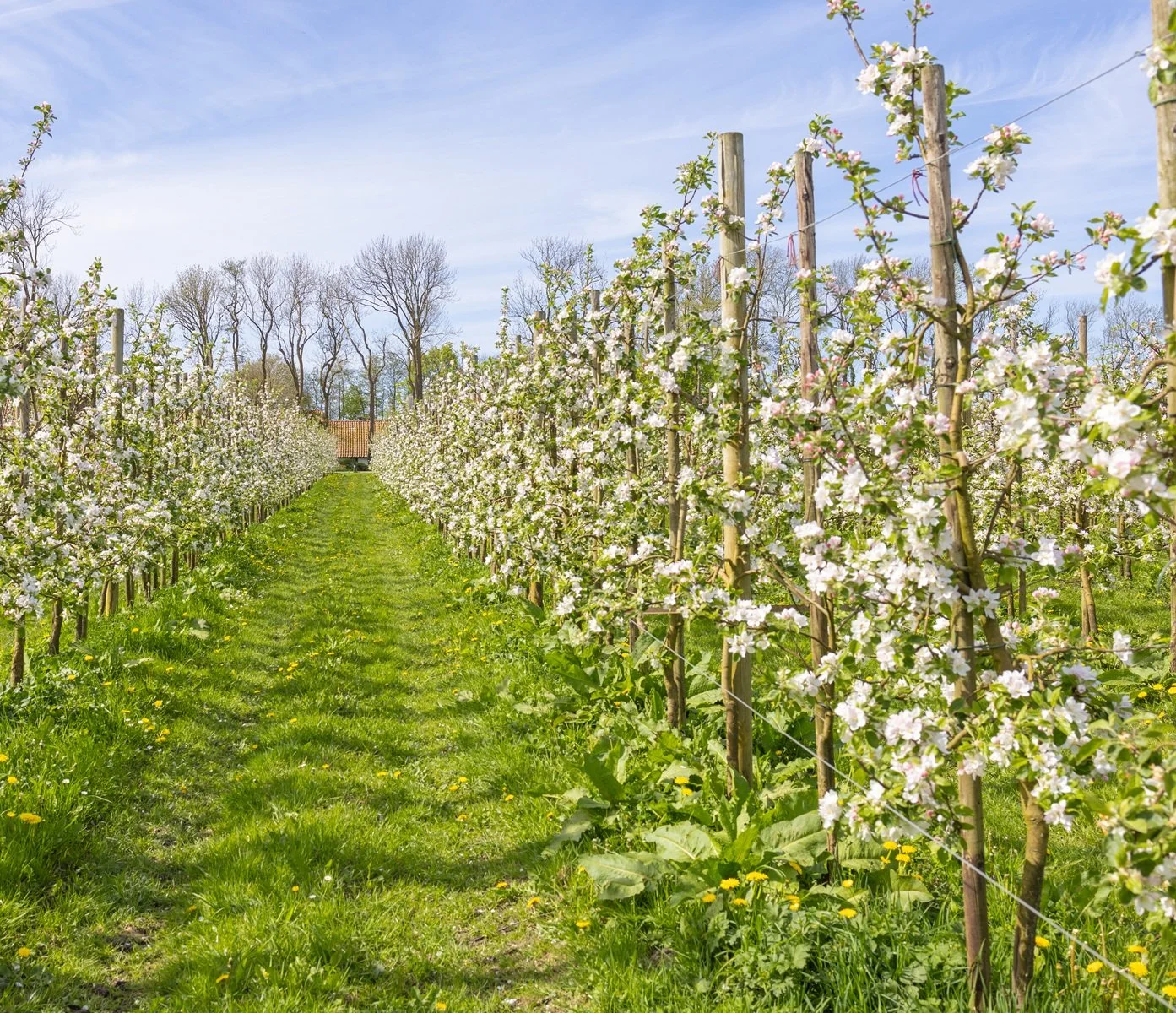
May is one of the most consequential months in the orchard calendar. After blossom and pollination, the young fruitlets that have successfully set are still fragile; vulnerable to dropping from the tree before they've had the chance to develop into a marketable crop. For apple, pear, cherry and plum growers across Kent, Worcestershire, Herefordshire and the Vale of Evesham, the weeks immediately following fruit set are a critical nutritional window. Getting the right micro-nutrients to the tree at the right moment can make a measurable difference to both the number of fruit that stay on and the uniformity of what develops. QuadRotor's agricultural drone services are increasingly being used to deliver that precision at exactly the right time.
Why Does Foliar Nutrition Matter at Fruit Set?
At fruit set, young fruitlets compete with one another and with the tree's other growth demands for available nutrients. Specific micro-nutrients (calcium, boron and magnesium in particular) play a direct role in cell development, fruit retention and the structural integrity of the developing fruit. Deficiencies at this stage don't always show up immediately as visible symptoms; they appear later in the season as uneven sizing, poor skin finish, or higher-than-expected pre-harvest drop.
Foliar application at fruit set allows those nutrients to be delivered directly to the tree rather than relying solely on root uptake through the soil - a slower and less predictable pathway at a time when the crop's requirements are both specific and urgent.
What Makes Drone Application Particularly Suited to This Task?
Two things matter most at fruit set: timing and coverage. The nutritional window is relatively short, and orchards in May can still present difficult access conditions after spring rain. Ground-based spray rigs are effective in dry conditions on flat or gently sloping ground, but in a wet May (common enough across the Midlands and the Welsh borders), the risk of soil compaction and root damage from heavy machinery is a real consideration at exactly the point when the trees are under most developmental pressure.
Drones sidestep that problem entirely. They operate regardless of ground conditions, cover the orchard without wheel tracks, and can be deployed quickly when the timing is right rather than waiting for the ground to firm up.
How Does the Drone's Downwash Affect Coverage in an Orchard?
This is one of the more technically interesting aspects of drone application in an orchard setting. The rotors generate a column of downward airflow beneath the aircraft that actively drives spray droplets into and through the canopy, reaching the underside of leaves and inner branch structures that a conventional over-row sprayer may not penetrate as effectively.
In May, when leaf growth is still relatively open compared to the dense canopy of midsummer, this penetration effect is particularly valuable. The nutritional spray reaches the parts of the tree (and the developing fruitlets attached to them) that need it most, rather than sitting primarily on the outer canopy surface.
Can Drone Application Be Targeted to Specific Areas of an Orchard?
Yes, and this is where the precision element becomes commercially relevant. Not every block in an orchard performs identically. Areas with known nutritional history, specific variety blocks with different requirements, or sections of the orchard where previous seasons have shown higher rates of pre-harvest drop can all be treated with adjusted rates or timing without the entire orchard receiving a blanket application.
RTK GPS flight planning means the drone follows a precise, repeatable route that can be varied by zone across a single operation. For orchard managers running mixed variety plantings across multiple blocks (as is common across the top-fruit growing regions of the South East and West Midlands), that flexibility is a practical advantage rather than a theoretical one.
How Quickly Can a Drone Cover an Orchard?
Coverage rates vary depending on tree spacing, row configuration and the specific application, but agricultural drones can cover considerably more ground per day than many growers initially expect. For orchards where timing is everything (and where a short nutritional window combined with changeable May weather leaves little margin), the speed of drone deployment and application is often as valuable as the precision of the technology itself.