
The Case for Ground-Level Precision: What Rovers Bring to the Modern Orchard
Orchard management has always demanded careful attention to detail. Getting the right product to the right place at the right time is straightforward in principle but considerably more complicated in practice, particularly as orchards become more intensively planted and the range of treatments required through the season grows. Autonomous ground rovers are changing what's possible at ground level, and for many commercial orchard operations, the advantages over traditional methods are becoming hard to overlook.
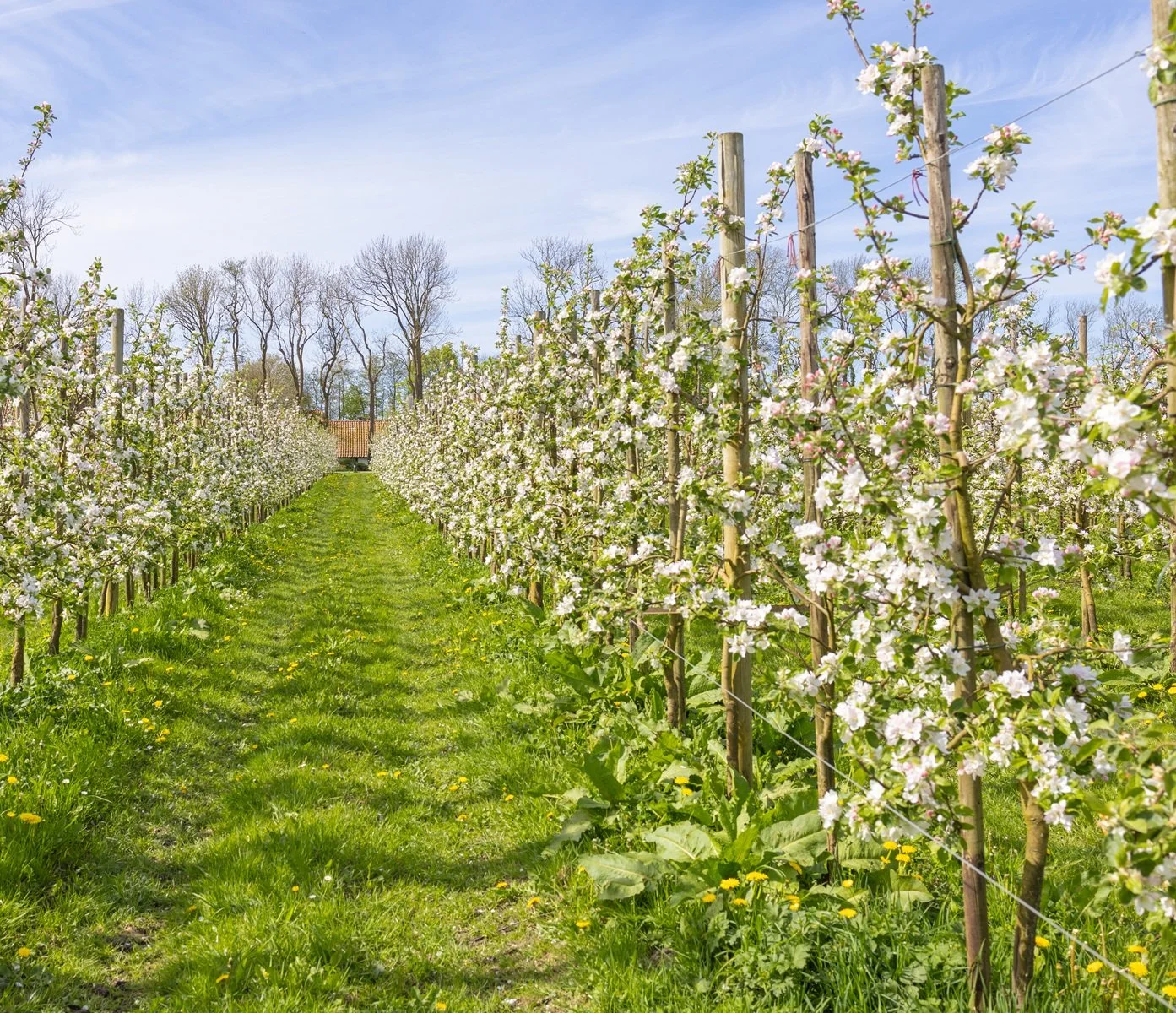
What are the limitations of traditional orchard spraying methods?
Conventional orchard spraying relies on tractor-mounted equipment, knapsack sprayers or hand lances. Each has its place but each also has significant limitations. Tractor-mounted air-blast sprayers are effective on open layouts but struggle in tightly planted modern orchards where row widths are narrow and canopy architecture is carefully managed. They also place considerable weight on the soil, contributing to compaction in the inter-row strip that can affect root health over time.
Knapsack and hand lance applications are labour-intensive and physically demanding, particularly during warm weather, when protective equipment adds to the discomfort. Coverage quality depends heavily on operator technique and consistency, which can vary across a large site or a long working day.
Neither method is well suited to the demands of a modern commercial orchard running a full-season treatment programme across a large area.
How does an autonomous agricultural rover improve on traditional orchard spraying?
The XAG R100 agricultural rover navigates orchard rows autonomously, delivering treatment consistently and precisely, without the limitations of tractor equipment or manual methods. Its compact profile allows it to work in rows inaccessible to conventional machinery. Its programmed route ensures every pass follows exactly the same path, maintaining consistent application across the whole site.
Because the rover operates independently, a single operator can oversee the programme from a safe distance rather than working directly alongside the machinery or carrying equipment through the rows. That shift in how the work is done has practical benefits for staffing, operator welfare and the overall efficiency of the treatment programme.
What orchard treatments can an agricultural rover deliver?
Ground-based rover treatment covers the chemical applications that cannot currently be made via drone in the UK. Fungicide programmes are the most time-critical of these in a commercial orchard; apple scab, powdery mildew and brown rot all require consistent, timely applications throughout the growing season, and the consequences of a missed window can be significant.
Herbicide applications in the inter-row strip and around the base of trees are equally well suited to rover delivery, as are any other ground-based chemical treatments that form part of the orchard's crop protection plan.
For nutrition and biostimulant applications, the XAG P100 Pro agricultural drone remains the most appropriate platform, approaching the canopy from above and using its downwash to drive product into the foliage. The rover and the drone work well together as complementary tools within a broader orchard management programme.
How does the rover's JetSprayer system achieve canopy penetration in orchards?
Getting product to the inner parts of the canopy is one of the persistent challenges in orchard spraying. Outer foliage intercepts a significant proportion of what a conventional sprayer delivers, leaving the areas where disease most readily develops under-treated.
The rover's JetSprayer system uses directed airflow to drive the spray into the canopy from the side, pushing it through the foliage rather than simply coating the outer surface. Coverage reaches both sides of the leaves and penetrates to the inner parts of the tree, including the areas around developing fruit where thorough protection matters most. The result is more uniform coverage than conventional equipment typically achieves, maintained consistently across every row and every pass.
Is an agricultural rover suitable for older or traditional orchard layouts?
Yes, and in some respects traditional orchard layouts suit the rover particularly well. Older orchards with standard or half-standard trees on wider spacings present fewer access challenges than modern high-density plantings, and the rover's autonomous navigation handles the variation in row length and layout that older sites often involve.
For more traditional orchards across the West Midlands cider-apple country, the Vale of Evesham or the older perry pear plantings of Gloucestershire, rover-based treatment offers a practical alternative to the increasingly difficult task of finding and retaining skilled operators for manual spraying programmes.
What is the return on investment from switching to rover-based orchard treatment?
This depends on the size of the operation, the current treatment method and the products being applied. The most straightforward gains tend to come from consistent coverage (which supports better crop protection outcomes), reduced operator time in the spray environment, and the ability to maintain a treatment programme without being dependent on contractor availability or staff capacity.
For a detailed discussion of how rover treatment could work within your orchard operation, the QuadRotor team is happy to talk through your specific situation. Get in touch to arrange a conversation or to find out more about what a demonstration on your site would involve.